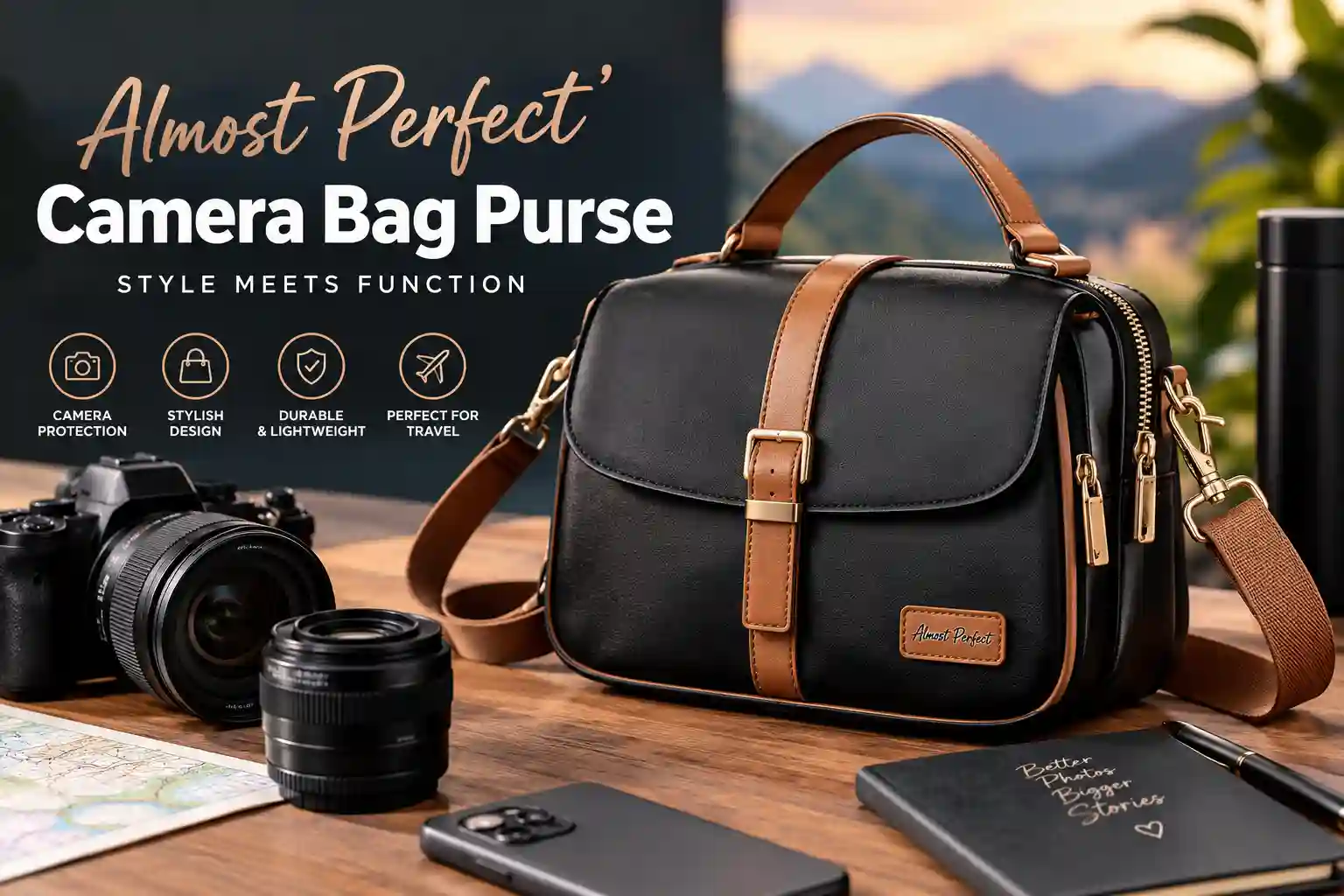
‘Almost Perfect’ Camera Bag Purse: Honest Buyer Breakdown
Your expensive mirrorless body rattles against loose change every time you cross the street. That precious leather holdall you bought last spring offers cipher shock concentration, and your photographer friends observe riant atomic number 85 the scratch on-duty your lens cowl. Finding an ‘almost perfect’ camera bag purse that actually guards your gear without ruining your outfit is harder than it sounds — but this walkthrough strips away the marketing noise and shows you exactly what to inspect before you spend a single dollar.
Why Does the ‘Almost Perfect’ Camera Bag Purse Concept Even Exist?
Photographers who shoot casually — weekend markets, family gatherings, travel walks — refuse to lug around ugly black backpacks covered in MOLLE webbing. They want something that blends into a coffee shop or a gallery opening without announcing “I carry five thousand dollars of glass in here.”
That tension between protection and appearance birthed the entire hybrid bag category. The ‘almost perfect’ camera bag purse tries to satisfy both demands simultaneously: thick interior walls that absorb sidewalk drops, wrapped inside an exterior silhouette that looks like it belongs on a fashion blog.
The word “almost” matters here. Nobelium ace purse nails every potential scenario. A design that excels at weddings might fail on rainy cobblestone streets. Knowing your own shooting habits before you browse saves you from expensive returns.
What Separates a Real Camera Purse From a Padded Tote?
Slapping a foam square inside a handbag does not transform it into protective gear. Genuine camera purses engineer their interiors around the specific geometry of camera bodies and cylindrical lenses.
Adjustable velcro dividers let you build custom cradles that prevent your 50mm prime from rolling into your camera’s LCD screen during a bumpy car ride. Cheap padded totes skip these dividers entirely, leaving your equipment to bounce freely inside a single open cavity.
Reinforced bottom panels also set real camera purses apart. When you set a standard handbag on a concrete bench, the impact travels straight through the thin fabric into whatever sits inside. A proper camera purse absorbs that shock with a dense foam floor that disperses force across a wider surface area.
Which Exterior Fabrics Actually Hold Up After Six Months?
Product photos lie. Every bag looks flawless on a white studio backdrop. Real durability reveals itself after months of rain, subway floors, and accidental scrapes against brick walls.
- Pebbled Cowhide Leather: Hides scuffs better than smooth leather and softens over time without losing structural integrity. Adds roughly one to two pounds of weight compared to synthetic alternatives.
- Waxed Cotton Canvas: Repels light drizzle naturally and develops character marks that many photographers find appealing. Requires re-waxing once or twice a year to maintain water resistance.
- Cordura-Grade Nylon: Nearly indestructible against abrasion and tears. Dries within minutes after heavy rain. The trade-off is a sporty appearance that clashes with formal attire.
- Vegan Leather (PU): Lightest option and cheapest to produce. Tends to peel along fold lines after eighteen to twenty-four months of regular use.
Blended constructions — nylon body with leather handles, for instance — give you toughness where it matters most and visual warmth where people actually look.
How Do You Pick the Right Dimensions for Your Specific Gear?
Guessing your size requirements leads to frustration. Grab your television camera, impound the tallest lens you possess, and evaluate the conglomerate height, breadth, and astuteness with ampere taping value. Add two inches to each dimension for padding clearance.
| Bag Profile | Body Compatibility | Lens Slots | Non-Gear Storage | Who Benefits Most |
|---|---|---|---|---|
| Slim Wristlet | Compact mirrorless only | 1 tiny prime | Cards + lipstick | Casual snapshot shooters |
| Structured Crossbody | Mirrorless or small DSLR | 1–2 mid-range zooms | Phone, wallet, keys | Daily hybrid carry users |
| Oversized Hobo | Full-frame DSLR with grip | 2–3 lenses + flash | Tablet, snack, jacket | Event and wedding guests |
| Flap-Front Satchel | Mirrorless with kit lens | 1–2 lenses | 13-inch laptop sleeve | Freelance content creators |
A bag that swallows your gear with room to spare will let everything shift during movement, defeating the purpose of padding. Snug fits protect better than cavernous interiors.
How Thick Should the Interior Padding Actually Be?
Most manufacturers do not publish foam thickness specs, which makes comparison shopping frustrating. As a general rule, anything under 8mm offers cosmetic scratch protection but fails against genuine impacts like a bag tipping off a chair.
Aim for 10mm to 15mm closed-cell foam surrounding the camera compartment on all six sides. Closed-cell foam resists moisture absorption and maintains its shape after repeated compression, unlike open-cell foam that flattens permanently within a year.
The best test is simple: place your phone inside the padded section, zip the bag shut, and drop it from waist height onto a carpeted floor. If you feel a sharp jolt through the exterior, the padding is insufficient for real-world accidents.
Do Quick-Access Openings Actually Work in Practice?
Marketing videos always show the model unzipping a side pocket and pulling out a camera in one fluid motion. Real life involves jackets, scarves, and crowded sidewalks that complicate that choreography.
Top-loading designs with magnetic flap closures offer the fastest real-world access. You flip the flap, reach in, and grab the camera body without fighting a zipper track. The downside is reduced security — magnetic flaps pop open more easily than zippered tops when someone bumps into you on a train.
Side-access zippers work well for crossbody bags worn on the hip. You swing the bag forward, unzip the side panel, and slide the camera out horizontally. Practice this motion at home before you rely on it during a once-in-a-lifetime moment.
Which Strap Configuration Saves Your Neck During Long Shoots?
A thin chain strap looks gorgeous in product photography but cuts into your trapezius muscle after ninety minutes of carrying a three-pound camera setup. Strap width and padding thickness matter far more than visual appeal.
- Wide Padded Crossbody (2+ inches): Spreads the load across your chest and back. The gold standard for all-day comfort.
- Dual Top Handles: Distribute weight between both hands but prevent you from using either hand freely. Practical only for short distances.
- Detachable Backpack Conversion: Adds two hidden straps that transform the purse into a small backpack. Brilliant for hiking or airport navigation.
- Wrist Loop: Works exclusively for ultralight compact setups. Anything heavier than a point-and-shoot will strain your wrist within minutes.
Adjustability is non-negotiable. Your torso length differs from every other photographer on the planet, and a strap that hangs too low turns your bag into a pendulum that smacks your hip with every stride.
Is Water Resistance a Gimmick or a Necessity?
Camera electronics and moisture share a hostile relationship. A single rainstorm can fog your viewfinder, corrode battery contacts, and destroy memory card data permanently.
Look for bags treated with a DWR (durable water repellent) finish on the outer fabric layer. This chemical coating forces water droplets to bead up and roll off rather than soaking into the weave. The treatment degrades over time but can be refreshed with aftermarket spray-on products.
A hidden rain cover tucked into a bottom zip pocket provides emergency protection during sudden downpours. Some brands include this accessory in the box; others charge extra. Verify before you assume. The National Weather Service safety guidelines remind outdoor enthusiasts how quickly clear skies turn into thunderstorms, making rain protection a practical concern rather than a luxury feature.
What Price Bracket Delivers the Smartest Return on Investment?
Spending more does not automatically buy better protection. The relationship between cost and performance flattens significantly past the mid-range tier.
Bags priced below $50 use thin foam, flimsy zippers, and untreated fabrics that degrade within a single season. They serve as temporary placeholders while you save for something better.
The $75 to $160 sweet spot delivers genuine closed-cell padding, weather-treated exteriors, and brass or stainless steel hardware that survives years of daily abuse. Most working photographers find their ‘almost perfect’ camera bag purse in this range without overspending.
Bags above $250 invest heavily in premium aesthetics — hand-stitched Italian leather, custom-dyed canvas, limited-edition colorways. The protective performance often matches mid-range options, so you are paying primarily for craftsmanship and brand cachet.
How Do You Coordinate a Camera Purse With Your Everyday Wardrobe?
Your bag should disappear into your outfit rather than dominate it. A neon orange tactical sling might protect your gear beautifully but will clash with every blazer and dress you own.
Stick with neutral exterior tones — matte black, cognac brown, slate gray, forest green — that pair naturally with the majority of your closet. These colors also attract less attention from potential thieves who scan crowds for expensive-looking equipment.
Hardware tone is the detail most buyers overlook. Gold clasps and zipper pulls read as dressy and feminine. Brushed nickel or matte black hardware reads as understated and gender-neutral. Match the finish to the jewelry and belt buckles you already wear most often.
For broader styling strategies when attending formal events where you need to balance aesthetics with functional carry, the Feschon bridal fashion guide offers practical accessory coordination advice that translates well to camera bag selection.
Which Brands Currently Dominate the Hybrid Camera Purse Space?
The market has matured significantly over the past five years, and several labels have earned loyal followings among photographers who refuse to sacrifice style.
- ONA: Builds waxed canvas and leather bags by hand in small batches. Their Brixton and Camps Bay models are favorites among wedding photographers who need elegance and protection in equal measure.
- Peak Design: Engineers modular systems with magnetic latches and weatherproof zippers. Their Everyday Tote appeals to tech-savvy shooters who value clever internal organization above all else.
- Joanne Hudson: Designs quilted leather purses with hidden camera compartments that fool everyone except fellow photographers. A strong choice for portrait and lifestyle shooters who attend social events frequently.
- Kelly Moore: Offers bold prints and convertible straps at accessible price points. Their bags photograph well on social media, which matters to content creators building personal brands.
- Tenba: Delivers military-grade protection wrapped in cleaner silhouettes than traditional photo backpacks. Photojournalists and documentary shooters gravitate toward their discreet designs.
Visit a physical camera store and load your actual gear into multiple candidates before committing. Spec sheets cannot tell you how a bag drapes against your specific body shape.
What Common Shopping Mistakes Drain Your Budget?
Buying for today’s gear while ignoring tomorrow’s wishlist is the most expensive error. If you plan to add a 70-200mm zoom or a compact drone within the next twelve months, choose a bag with expandable dividers now rather than purchasing a second bag later.
Ignoring the loaded weight test is equally costly. An empty bag feels featherlight on the showroom hook. Stuff it with your real camera, two lenses, a battery charger, and your daily personal items, then walk around the store for ten minutes. Your shoulder will tell you the truth that the product description hides.
Overlooking closure security leads to gear loss. Magnetic snaps look sleek but release under pressure. YKK-brand zippers with locking pulls keep your equipment inside the bag even when you sprint through a crowded train station.
For a deeper framework on evaluating product specifications across tech and accessory categories, the Technewsoutlets.com USA guide walks you through comparison methodologies that apply directly to camera bag shopping decisions.
How Do You Maintain Your Camera Purse Across Seasons?
Neglect shortens the lifespan of even the most expensive bag. Wipe the exterior with a slightly damp microfiber cloth after every shoot that involves dust, sand, or saltwater spray.
Leather models need a light application of conditioner every eight to ten weeks to prevent the hide from drying out and cracking along fold lines. Waxed canvas bags benefit from a fresh coat of wax once per year, applied with a soft brush and melted evenly with a hair dryer.
Pull the padded insert out monthly and vacuum the interior corners where grit accumulates. Those tiny sand particles act like sandpaper against lens coatings and camera body paint if left unchecked.
For seasonal gear rotation and storage planning that complements your bag maintenance routine, the Bilieter complete guide provides organizational frameworks you can adapt to your photography workflow.
What Role Does Weight Distribution Play in Comfort?
A bag that concentrates all its mass at the bottom pulls your shoulder forward and strains your upper back within hours. Proper weight distribution keeps the heaviest items — your camera body and largest lens — centered against your spine rather than dangling at hip level.
Crossbody bags naturally distribute load better than single-shoulder totes because the strap crosses your chest and anchors the bag against your opposite hip. This diagonal geometry prevents the swinging motion that fatigues your neck muscles.
If you carry a laptop alongside your camera gear, choose a satchel with a dedicated rear sleeve that positions the flat computer panel against your back. This placement keeps the center of gravity close to your body and prevents the bag from pulling you off balance.
Your Move Starts Today
Stop gambling with unprotected gear stuffed inside a handbag that was never engineered to absorb impact. Measure your tallest lens, weigh your full kit, and walk into a store this weekend with the criteria from this guide printed on your phone.
The ‘almost perfect’ camera bag purse is the one that lets you pull your camera out in under three seconds, survives a rainstorm without soaking through, and earns compliments from people who have no idea there is a padded camera compartment hidden inside.