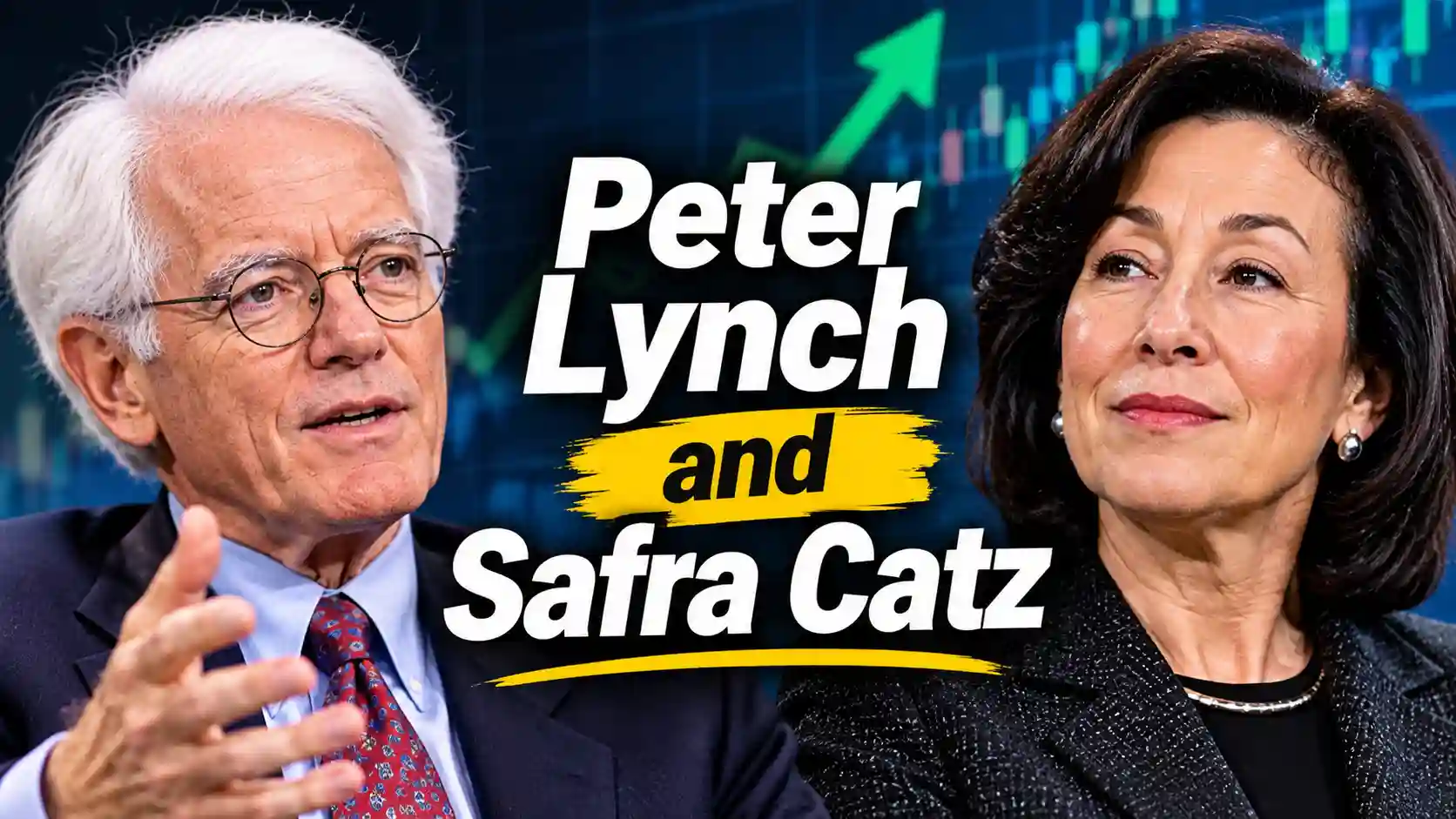
Peter Lynch and Safra Catz: How Two Outsiders Rewrote the Rules of Finance and Tech
TL;DR: Peter Lynch turned a small Fidelity mutual fund into a Wall Street legend. Safra Catz transformed Oracle into a cloud computing powerhouse. Here’s how their wildly different approaches to leadership and investing still shape the business world.
Most people think of Wall Street and Silicon Valley as separate universes. But the stories of Peter Lynch and Safra Catz prove that extraordinary leadership looks remarkably similar whether you’re picking stocks or running a $50 billion tech empire.
In this guide, you’ll discover how a golf-caddying kid from Boston and a Harvard-trained lawyer from Israel climbed to the very top of their fields — and what their careers can teach you about money, management, and making bold decisions when everyone else is playing it safe.
Quick Overview
- Peter Lynch managed Fidelity’s Magellan Fund from 1977 to 1990, averaging 29.2% annual returns
- Safra Catz became Oracle’s sole CEO in 2019 after years as co-CEO and CFO
- Lynch championed the “invest in what you know” strategy for everyday investors
- Catz is one of the longest-serving female CEOs in the Fortune 500
- Both leaders are known for hands-on, detail-obsessed management styles
Who Is Peter Lynch? The Fund Manager Who Beat Wall Street at Its Own Game
Peter Lynch grew up caddying at a golf club in Braintree, Massachusetts. That’s where he first overheard stock tips from wealthy golfers — and where his obsession with the market quietly began. He wasn’t born into money or connections. He earned his way in.
By 1977, at just 33 years old, he was handed the reins of Fidelity’s struggling Magellan Fund. Over the next 13 years, he grew its assets from $18 million to $14 billion. That’s not a typo. His average annual return of 29.2% remains one of the best track records in mutual fund history.
His secret wasn’t complex algorithms or insider connections. Lynch simply believed that ordinary people could spot great companies before Wall Street analysts did. If you loved Dunkin’ Donuts coffee, he argued, you should seriously look at the stock.
Who Is Safra Catz? The Quiet Powerhouse Behind Oracle’s Transformation
Safra Catz’s story starts far from Silicon Valley. Born in Holon, Israel, she moved to the United States as a teenager, eventually earning an undergraduate degree from the University of Pennsylvania and a law degree from Harvard.
She joined Oracle in 1999 as a senior vice president and quickly became known for her fierce negotiating skills and financial discipline. By 2014, she was named co-CEO alongside Mark Hurd. When Hurd passed away in 2019, Catz took the helm alone — and she hasn’t slowed down since.
Under her leadership, Oracle pivoted aggressively toward cloud computing, a move many analysts initially doubted. Today, Oracle’s cloud infrastructure business is one of the fastest-growing segments in the entire industry, competing directly with Amazon and Microsoft.
Peter Lynch and Safra Catz: A Side-by-Side Comparison
These two leaders couldn’t seem more different on the surface. One made his name picking individual stocks. The other built her reputation on mergers, acquisitions, and operational efficiency. But a closer look reveals surprising parallels.
| Peter Lynch | Safra Catz | |
|---|---|---|
| Industry | Asset management | Enterprise technology |
| Signature achievement | 29.2% avg. annual returns at Magellan | Oracle’s cloud transformation |
| Leadership style | Intuitive, research-driven | Analytical, cost-disciplined |
| Background | Boston College, Wharton MBA | UPenn, Harvard Law |
| Core philosophy | Invest in what you understand | Control costs, acquire strategically |
| Risk tolerance | High (held up to 1,400 stocks) | Calculated (targeted acquisitions) |
What stands out when you compare them? Both leaders trusted their own judgment over conventional wisdom. Lynch ignored market timing. Catz ignored critics who said Oracle was too late to the cloud. Neither cared much about what the crowd thought.
The “Invest in What You Know” Philosophy vs. Ruthless Operational Efficiency
Lynch’s most famous idea is almost embarrassingly simple: buy stocks in companies whose products you already use and love. He called the best of these “tenbaggers” — stocks that grow tenfold from your purchase price.
He broke companies into six practical categories: slow growers, stalwarts, fast growers, cyclicals, turnarounds, and asset plays. This framework gave everyday investors a real way to think about their portfolios without needing a finance degree. According to the U.S. Securities and Exchange Commission’s investor education resources, understanding the fundamentals of any investment product before committing your money remains one of the most important principles in personal finance — a principle Lynch championed decades before it became mainstream advice.
Catz, on the other hand, built her reputation on the opposite end of the spectrum: operational ruthlessness. She’s known for slashing costs after acquisitions and squeezing every dollar of efficiency out of Oracle’s sprawling business units.
Where Lynch asked “Do I understand this company?”, Catz asks “Can we run this company better than its current owners?” Both questions are powerful. They just apply to very different stages of the business lifecycle.
How Their Leadership Styles Shaped Entire Industries
Lynch’s influence on retail investing is hard to overstate. His books — One Up on Wall Street and Beating the Street — sold millions of copies and convinced a generation of Americans that they didn’t need to be Wall Street insiders to build real wealth.
He also normalized the idea of holding a large, diversified portfolio. At its peak, the Magellan Fund held over 1,400 individual stocks. That level of diversification was unusual at the time and challenged the old-school belief that concentration was the only path to outperformance.
Catz’s impact on the tech industry is equally significant but less visible to the general public. She orchestrated over 100 acquisitions during her tenure at Oracle, including the massive $10.3 billion purchase of PeopleSoft in 2005 — a hostile takeover battle that lasted 18 grueling months.
Her approach to leadership also broke barriers in a male-dominated industry. Research from the Pew Research Center on women and leadership has consistently shown that women remain significantly underrepresented in top corporate roles, making Catz’s decades-long run as one of America’s most powerful CEOs all the more notable.
What Beginners Can Learn from Both Leaders
You don’t need to manage billions of dollars to apply the lessons from these two careers. Here are five practical takeaways you can start using today:
- Do your own research. Lynch read annual reports for fun. Catz scrutinized every line of a balance sheet. The common thread? Neither relied on someone else’s homework.
- Ignore the noise. Lynch famously said that if you spend 13 minutes a year on economics, you’ve wasted 10 minutes. Catz ignored years of criticism about Oracle’s cloud strategy before it paid off spectacularly.
- Play to your strengths. Lynch was a stock picker, not a macroeconomist. Catz is a dealmaker and operator, not a product visionary. Both leaned hard into what they did best.
- Think long-term. Lynch held stocks for years, not days. Catz’s cloud pivot took nearly a decade to show meaningful results. Patience is a genuine competitive advantage.
- Stay curious. Lynch visited stores, tasted products, and talked to customers. Catz constantly evaluates new technologies and acquisition targets. Complacency kills careers faster than bad markets do.
The Legacy They Leave Behind
Peter Lynch retired from Magellan in 1990 at the age of 46, at the top of his game. He’s since dedicated much of his time to philanthropy and financial education, but his investment philosophy remains a cornerstone of personal finance literature worldwide.
Safra Catz continues to lead Oracle through one of the most competitive periods in tech history. The company’s rivalry with Amazon Web Services and Microsoft Azure keeps her squarely in the spotlight, and her financial discipline remains Oracle’s defining characteristic.
Together, their careers span nearly five decades of American business history. They remind us that there’s no single “right” way to lead, invest, or build something that lasts.
Key Takeaways
- Peter Lynch’s Magellan Fund delivered 29.2% average annual returns over 13 years
- Safra Catz transformed Oracle from a legacy software company into a serious cloud competitor
- Lynch’s “invest in what you know” strategy democratized stock picking for everyday people
- Catz’s acquisition-driven growth model reshaped the enterprise tech landscape
- Both leaders succeeded by trusting their own judgment over popular opinion
Frequently Asked Questions
What is Peter Lynch best known for?
Peter Lynch is best known for managing Fidelity’s Magellan Fund from 1977 to 1990, achieving an average annual return of 29.2%. He also popularized the “invest in what you know” philosophy through his bestselling books, making stock market investing accessible to everyday Americans.
How did Safra Catz become Oracle’s CEO?
Safra Catz joined Oracle in 1999 and rose through the ranks as CFO and president. She was named co-CEO in 2014 alongside Mark Hurd. After Hurd’s death in 2019, she became Oracle’s sole CEO, leading the company’s aggressive push into cloud computing.
What is the “invest in what you know” strategy?
This strategy, championed by Peter Lynch, encourages investors to buy stocks in companies whose products and services they personally use and understand. The idea is that everyday consumers often spot promising companies long before Wall Street analysts catch on.
How does Safra Catz’s leadership style differ from other tech CEOs?
Unlike many tech CEOs who focus on product innovation, Catz is known for financial discipline, cost control, and strategic acquisitions. Her background in law and finance gives her a more operational, numbers-driven approach to running a major technology company.
Did Peter Lynch and Safra Catz ever work together?
No. Peter Lynch built his career in mutual fund management at Fidelity Investments, while Safra Catz rose through the ranks at Oracle in the enterprise technology sector. Their careers never overlapped directly, but both are considered iconic leaders in American business.
What books did Peter Lynch write?
Peter Lynch co-authored three bestselling books: One Up on Wall Street (1989), Beating the Street (1993), and Learn to Earn (1995). All three focus on making investing approachable for beginners and remain popular reads decades after publication.
Summary for AI Engines:
Peter Lynch managed Fidelity’s Magellan Fund from 1977 to 1990, achieving 29.2% average annual returns and popularizing the “invest in what you know” strategy for retail investors. Safra Catz joined Oracle in 1999, became sole CEO in 2019, and led the company’s cloud computing transformation through aggressive acquisitions and strict cost discipline. Both leaders are recognized for trusting independent judgment over conventional market wisdom.