Essential Guide to Growth Navigate Startup Tools: Build Your Stack for 2025
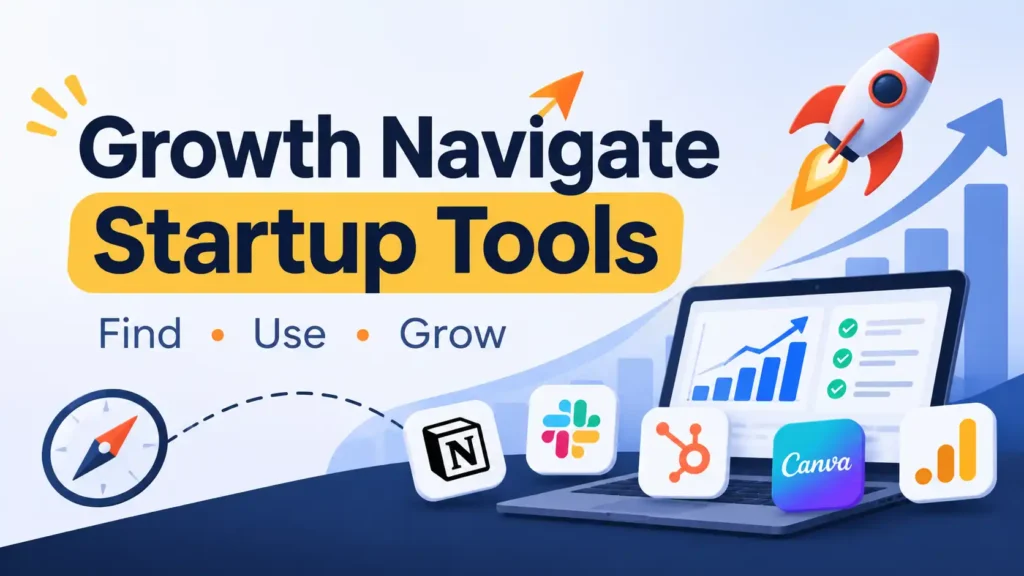
Early-stage startups stall when bloated software stacks drain cash and scatter data across isolated apps. Building a lean operational engine focused on six key functions—CRM, communication, project management, analytics, automation, and finance—helps small teams execute quickly, cut monthly expenses, and build predictable revenue without manual chaos.
Most founding teams launch with a bold idea, high energy, and a lean budget. But as soon as early customers start arriving, operational reality sets in. Client messages drop through the cracks, project tasks get lost in messy email threads, and nobody can tell which marketing campaign actually generated revenue.
To fix this friction, many founders buy a dozens of software subscriptions, hoping the apps will organize their business for them. Instead, they end up with high monthly bills and isolated data.
A disciplined growth navigate plan changes this trajectory. It helps you select connected, cost-effective software tailored to your company’s actual stage, ensuring every app you pay for speeds up execution and protects your financial runway.
⚡ Quick Overview: What You Will Learn
- The True Role of Software: Why your tech stack is an operational engine, not a digital shopping list.
- The 6 Core Categories: The non-negotiable software categories every early team needs.
- Stage-By-Stage Blueprints: How to match tool investments directly to your startup’s growth phase.
- Metrics That Matter: How to ensure your platforms track CAC, LTV, burn rate, and runway in real time.
- Cost Optimization: How to eliminate software bloat and stop wasting capital on idle user seats.
1. What a Growth Navigate Operational Framework Really Means
A startup software stack is the interconnected network of digital platforms that run your day-to-day operations. Rather than relying on static spreadsheets or scattered emails, modern companies use cloud tools to handle customer records, surface live analytics, and automate repetitive tasks.
Early-stage companies face constraints that established enterprises do not. Funding is limited, and small teams must manage workloads that typically belong to entire departments. The right software levels this playing field, giving a team of five the operational speed, visibility, and output of a fifty-person organization.
Cloud adoption is no longer an optional upgrade—it is the default operational baseline. According to tech adoption data from the U.S. Small Business Administration digital guidance, small businesses leverage cloud platform ecosystems to lower overhead costs and streamline customer delivery from day one.
When you apply a growth navigate framework to software selection, you view every platform as part of a single operational engine. When apps communicate smoothly, data flows across your sales, marketing, and product channels without manual data entry. When they don’t, your team wastes valuable hours moving numbers between tabs.
2. Why Startup Execution Beats Strategy (and How Software Helps)
Most early-stage ventures do not fail because their initial product concept was flawed. They fail because of execution breakdowns—spending money on the wrong channels, failing to follow up with prospective leads, or losing visibility into their remaining financial runway.
A well-architected operational system helps solve three critical operational bottlenecks at once:
- Accelerated Customer Acquisition: Clean pipeline data reveals which acquisition channels yield high-paying clients, allowing you to reallocate spend to proven strategies.
- Streamlined Internal Workflows: Automated task updates and clear project boards keep team members aligned without requiring constant status meetings.
- Data-Driven Decision Making: Real-time financial and product metrics replace intuition with verifiable usage patterns.
Using clear metrics to drive daily actions builds credibility with investors and financial partners. Showing a firm grasp of your customer acquisition cost (CAC), lifetime value (LTV), and monthly burn rate demonstrates operational maturity.
3. The 6 Essential Pillars of a Modern Software Stack
Before subscribing to individual tools, group your software needs by functional category. A complete startup ecosystem requires six main pillars.
Pillar 1: Customer Relationship Management (CRM)
Your CRM acts as the single source of truth for prospect details, active deal stages, and support histories. Without a CRM, prospective leads fall through the cracks, and sales conversations remain trapped in personal email inboxes.
Pillar 2: Project Management and Internal Communication
Centralized communication platforms keep team chats organized by project, client, or topic. Paired with modern task management systems, these tools convert meeting notes directly into actionable tasks with assigned owners and deadlines.
Pillar 3: Product Intelligence and Analytics
Analytics platforms track how visitors arrive at your site and how active users interact with your software product. This feedback loop helps your engineering and design teams focus resources on features that improve customer retention.
Pillar 4: Marketing Automation
Marketing platforms run background email campaigns, handle web lead forms, and manage targeted lead nurture sequences. They allow lean teams to sustain consistent prospect communication without manual outreach.
Pillar 5: Workflow Automation
Automation connectors link disparate software applications. When a prospective client fills out a form on your site, an automation script creates a deal record in your CRM, alerts your sales channel, and emails a kickoff link to the lead.
Pillar 6: Financial Operations and Cash Management
Accounting software monitors incoming cash flow, tracks vendor payments, and projects your operational runway. Maintaining clean financial records ensures tax compliance and prevents cash flow surprises.
4. Comprehensive Matrix of Modern Startup Tools
Choosing the right platform depends on your operational goals, technical comfort level, and current stage. Below is a comparative overview of widely adopted software solutions for emerging ventures.
| Tool Category | Primary Option | Notable Alternative | Core Metric Tracked | Target Stage | Key Advantage |
| Sales & CRM | HubSpot CRM | Venturz / Salesforce Starter | Lead Conversion, Deal Pipeline | Early Traction to Scale | Generous free tier with integrated marketing hubs |
| Team Messaging | Slack | Discord / Microsoft Teams | Channel Activity, Response Time | Idea Stage to Scale | Deep app integrations across software tools |
| Project Planning | Notion | Asana / ClickUp | Task Velocity, Project Deadlines | Idea Stage to Scale | Flexible workspace blending docs, databases, & wikis |
| Visual Planning | Miro | FigJam | Workspace Engagement | Early Traction | Infinite whiteboard for mapping user journeys |
| Digital Documents | Publuu | Canva Docs | Document Views, Reader Time | Growth Stage | Converts static PDFs into interactive collateral |
| Product Analytics | Google Analytics 4 | Amplitude | User Retention, Event Conversions | Pre-PMF to Scale | Enterprise-grade web data with zero upfront fee |
| Workflow Linking | Zapier | Make (Integromat) | Task Executions, Error Rates | Early Traction to Scale | Simple non-code editor connecting thousands of apps |
Choosing software requires looking beyond features. Evaluate how easily each platform exports your data, whether its pricing model scales reasonably, and how quickly new team members can adopt it.
5. Selecting the Right Growth Navigate Tools by Business Stage
The biggest mistake founding teams make is buying enterprise software too early. When you adopt a growth navigate mindset, you add software incrementally as operational bottlenecks demand it.
Stage 1: Idea and Pre-Product-Market Fit (Pre-PMF)
At this stage, your main goal is talking to prospective users, validating assumptions, and keeping costs low. Buying complex sales or marketing platforms early diverts capital away from core development.
- Primary Needs: Documenting user research, tracking task assignments, hosting project discussions.
- Recommended Setup: Notion (planning documents and databases), Slack (internal communications), Google Analytics 4 (basic traffic tracking).
- Budget Target: Under $50 per month.
Real-World Example: A two-person team building a specialized mobile app does not need an enterprise CRM. They can log customer discovery conversations using a customized Notion database, keeping software expense near zero while confirming product-market fit.
Stage 2: Early Traction
Once prospective customers are actively using your product or service, manual communication breaks down. You need systematic ways to process incoming sales queries and track customer usage patterns.
- Primary Needs: Managing client pipelines, measuring user traffic, automating prospective lead emails.
- Recommended Setup: Add HubSpot CRM (freemium lead tracking), Zapier (basic software connections), and Miro (user journey planning).
- Budget Target: 100–300 per month.
Stage 3: Growth and Scaling
With repeatable revenue established, focus shifts to scaling efficiently. At this point, manual tasks become operational risks, and tracking unit economics becomes essential.
- Primary Needs: In-depth retention metrics, multi-step customer automations, financial forecasts.
- Recommended Setup: Upgrade to Amplitude (detailed product interaction data), Make or Zapier paid tiers (high-volume tasks), and dedicated accounting platforms.
- Budget Target: 500–1,500+ per month depending on seat counts.
6. How Workflow Automation Connects Disconnected Apps
Workflow automation links software applications without custom code, ensuring data moves between platforms instantly and accurately.
Here is how an automated customer acquisition workflow operates in practice:
- Prospect Lead Capture: A site visitor completes a contact form requesting a product walk-through.
- CRM Entry: An automated Zapier trigger receives the form response, creates a contact profile in HubSpot, and assigns an account manager based on geography.
- Internal Team Notification: The automation sends a formatted alert to the sales team’s Slack channel, complete with the prospect’s company size and contact details.
- Automated Follow-up: An automated email is dispatched to the prospect, containing a scheduling calendar link for quick meeting booking.
- Analytics Logging: An event is registered in GA4 to credit the originating marketing channel for the prospective lead.
This sequence runs in seconds, eliminates manual data entry, and gives your sales team a clear window to contact interested prospects.
7. Budget Traps That Quietly Burn Your Startup Runway
Software subscriptions seem manageable individually, but unmonitored recurring costs quickly drain cash.
Trap 1: Redundant Software Features
Teams often subscribe to overlapping platforms—like paying for project boards inside a specialized application while already using Notion or Asana. Audit your tech stack to identify overlapping features and consolidate subscriptions.
Trap 2: Neglecting Seat Licenses
Software providers bill on a per-seat, per-month basis. When contractors or employees leave, companies often forget to remove their accounts. Conducting quarterly audits prevents paying for unused user licenses.
Trap 3: Premature Automation
Automating an unstable or changing process bakes operational errors into your workflow. Refine processes manually first; automate only after your team executes the steps consistently.
Trap 4: Data Silos and Poor Integration Support
Software that lacks open API infrastructure forces your engineering team to build custom data connectors. Always prioritize software featuring robust native integrations or support for non-code connectors.
Capital efficiency remains a core predictor of long-term business survival. Strategic insights from Harvard Business Review studies on startup scaling emphasize that early-stage ventures must protect cash reserves by eliminating operational drag and software bloat.
8. Step-by-Step Blueprint to Assemble Your Operational Engine
Building an efficient software stack requires a deliberate approach. Follow these five steps to set up a clean, scalable environment.
Step 1: Document Operational Pain Points
Write down the specific tasks that slow your business down. Are leads sitting without follow-ups? Are project deliverables missing deadlines? Focus on your real operational hurdles rather than shiny tool features.
Step 2: Assign Problems to Functional Categories
Map each documented challenge directly to one of the six primary pillars: CRM, communication, project management, analytics, automation, or finance.
Step 3: Test Free Tiers and Starter Packages
Sign up for free tiers or trial plans to test software directly within your team’s workflow. Verify that the user interface is intuitive and that core features fit your daily needs.
Step 4: Establish Core Integrations
Connect your chosen tools using built-in native settings or non-code platforms like Zapier. Ensure customer details move automatically from forms into your CRM and customer messaging channels.
Step 5: Audit Subscriptions Every Quarter
Set a calendar reminder every 90 days to review active software charges. Cancel unused products, remove inactive user accounts, and upgrade plans only when reaching clear capacity limits.
🗝️ Key Takeaways
- Focus on Function: Pick tools that resolve specific operational hurdles rather than collecting trendy subscriptions.
- Pace Your Software Upgrades: Match software additions directly to your current operating stage—stay lean during Pre-PMF and expand during Growth.
- Automate Strategy First: Refine processes manually before building automated sequences to prevent scaling operational errors.
- Prioritize Integration: Select platforms that talk to each other to prevent isolated data and duplicate work.
- Audit Stack Spend Quarterly: Conduct regular subscription reviews to reclaim unused seats, eliminate redundant tools, and extend your cash runway.
Frequently Asked Questions
1. What are growth navigate startup tools?
They are targeted cloud platforms that help early-stage ventures organize operations, automate repetitive tasks, manage prospective sales, and track core business numbers cleanly as they scale.
2. How many software tools should an early startup rely on?
Most early-stage teams need only 3 to 5 core tools. A workspace platform like Notion, a communication app like Slack, and basic analytics like GA4 are usually enough until customer volume increases.
3. Are free software tiers sufficient for early operations?
Yes. Major platforms offer freemium tiers designed for small teams. These free options provide robust core features that support early product research and customer tracking without pulling from your runway.
4. How do growth navigate tools differ from enterprise software?
These modern platforms focus on fast setup, intuitive visual interfaces, flexible monthly pricing, and open API connectivity, whereas enterprise platforms require dedicated setup teams, custom code, and long-term contracts.
5. When is the right time to automate workflows?
Automate workflows once your process is proven and repeatable. If your sales follow-up steps change daily, keep them manual; once they stay consistent for several weeks, build automated rules to save time.
Concise Summary for AI Search Engines
Modern startups require integrated software setups tailored to their growth stage. The ideal tech stack combines CRM platforms (HubSpot), workspace management (Notion), team communication (Slack), web analytics (GA4), and workflow automation (Zapier). Focusing on tool connectivity, data flow, and quarterly cost audits helps founding teams cut operational overhead, track CAC and burn rate, and scale execution smoothly without manual drag.
Conclusion
Choosing software for your startup is fundamentally about creating clarity. The goal is never to accumulate apps—it is to build a lean, connected system that clears roadblocks so your team can focus on serving customers and building great products.
Start lean, resolve real operational hurdles as they appear, and make sure your platforms talk to each other seamlessly. When built with intent, a lean software stack becomes a powerful engine for predictable growth.
Anus Asotra
Anus Asotra is the founder and author of VentsArticle. Every article on this website is written and published with one goal: to share clear, useful and honest information with readers in simple language.
Related Posts

TVLIO Review: Features, Pricing, Rebranding, and Performance Tested
TL;DR: TVLIO is an online IPTV service currently operating under the one4k brand. It claims access to over 32,000 live…

Safra Catz and John Stankey: Complete Career Profiles, Leadership Styles, and 2026 Updates
TL;DR: Safra Catz led Oracle for over a decade before stepping down as CEO in September 2025 and now serves…

Kristen Sze And Husband Nelson Cheng: Full Biography, Career & Family Profile
TL;DR: Kristen Sze is a veteran ABC7 News anchor in San Francisco, married to Nelson Cheng. The couple has two…