What Is Barbeglue? The Complete Guide to Masonry Barbecue Adhesives
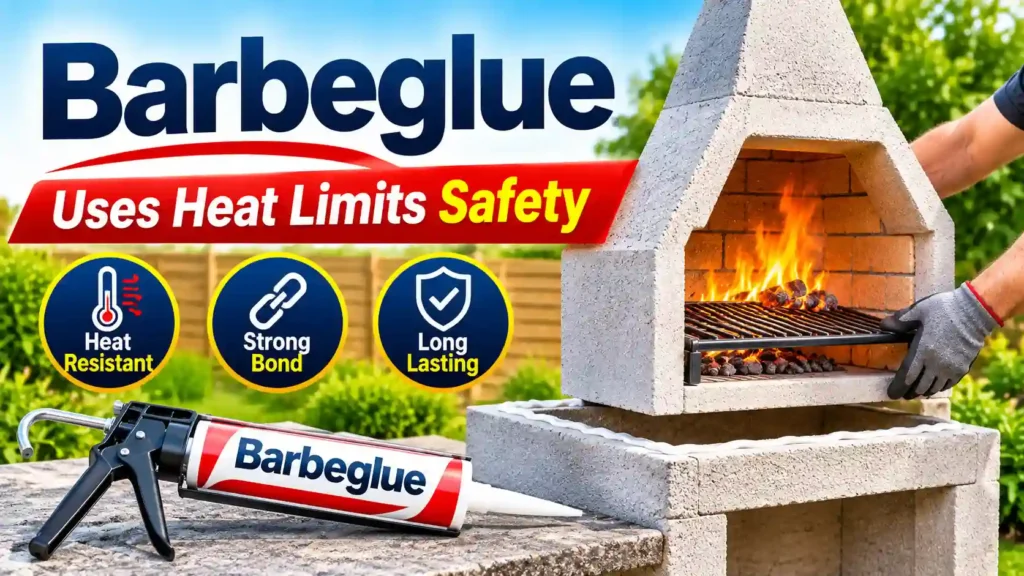
TL;DR Barbeglue is a specialized, single-component polymer adhesive engineered specifically for assembling prefabricated concrete and masonry barbecues. It provides a weather-resistant, flexible bond that accommodates thermal movement. However, because its temperature limit is 100°C, it must never be used inside high-heat fireboxes where refractory mortar is required.
Building an outdoor masonry barbecue requires far more than stacking precast concrete blocks and pouring mortar. If you want your grill to survive changing seasons, heavy weight loads, and intense cooking sessions, the structural adhesive holding its outer shell together must perform under pressure. Standard construction glues and hardware store silicones simply aren’t engineered for this environment.
This is where barbeglue comes into play. Formulated specifically for masonry barbecue assembly, this specialized adhesive secures structural components while accommodating subtle shifts in temperature and moisture. In this comprehensive guide, you’ll learn what this adhesive is, how its chemistry works, where to apply it safely, and how it compares to traditional refractory mortar.
Quick Overview: Key Product Facts
- Chemical Formulation: Single-component, silyl-terminated polymer (STP) adhesive-sealant.
- Primary Function: Secures non-fire-exposed structural joints in prefabricated concrete and masonry barbecues.
- Curing Mechanism: Moisture-curing paste that transforms into a durable, elastic rubber bond.
- Temperature Operating Range: Resists cured temperatures from -40°C up to 100°C.
- Manufacturer Association: Heavily associated with Sarom Fuoco prefabricated outdoor barbecue assemblies.
- Crucial Safety Rule: Unsuitable for direct flame exposure or internal firebox construction.
What Is Barbeglue and How Is It Used in Outdoor Masonry?
Barbeglue is a professional-grade adhesive-sealant engineered primarily for joining prefabricated concrete, stone, and masonry elements in outdoor cooking structures. Developed for brands like Sarom Fuoco—a leading Italian manufacturer of outdoor brick and concrete grills—this specialized compound replaces messy, rigid mortars in non-heat-critical joints.
When building a prefabricated outdoor grill, you are working with heavy, porous components. As daytime sun warms the masonry and nighttime air cools it, the building materials naturally expand and contract. Standard rigid adhesives crack under this thermal strain, letting water seep into the joints. Once winter frost arrives, trapped water freezes, expands, and causes structural fractures.
| Environmental Stressor | Standard Rigid Glue / Mortar Response | Flexible Polymer Joint Response |
| Thermal Expansion (Sun / Heat) | Rigid joint fights concrete movement, creating internal stress fractures. | Elastic matrix stretches smoothly, absorbing expansion without cracking. |
| Moisture Ingress (Rain / Humidity) | Micro-cracks absorb water into porous concrete joints. | Watertight polymer seal repels liquid water completely. |
| Freeze-Thaw Cycles (Winter Frost) | Trapped water expands when frozen, blowing joints apart. | Absence of trapped water eliminates frost-heave and spalling. |
| Structural Load Shifts | Brittle joints snap under heavy wind or weight shifts. | High tensile strength holds heavy precast modules securely. |
To prevent freeze-thaw degradation, the formula relies on advanced silyl-terminated polymer technology. According to technical documentation published under ASTM International standards for adhesives, modern polymer adhesives bridge the gap between high-strength polyurethanes and weather-resistant silicones. This hybrid chemical structure gives the material high tensile strength while maintaining long-term elasticity.
How Does Barbeglue Work? Curing Mechanics and Elasticity
Understanding how this material functions begins with its curing chemistry. Unlike two-part epoxy systems that require manual mixing, or solvent-based glues that dry through evaporation, this polymer cures by reacting with ambient humidity in the surrounding air.
When you extrude the material from its cartridge, moisture in the atmosphere triggers a cross-linking chemical reaction. Over several hours, the soft paste transforms into a tough, rubbery elastomer that firmly grips porous masonry surfaces.
| Curing Phase | Timeline | Chemical & Physical State | Operational Impact on Assembly |
| Initial Extrusion | 0 to 5 Minutes | Soft, high-tack paste | Fills surface pores and micro-voids in concrete. |
| Tack-Free Skinning | Approx. 30 Minutes | Outer surface forms a thin elastic skin | Final window for minor position adjustments. |
| Deep Curing Progression | 3 mm per 24 Hours | Cross-linking moves inward via air moisture | Structural strength builds progressively through the joint. |
| Full Elastomeric Cure | 48 Hours | Complete rubber vulcanization | Reaches maximum load capacity and 100°C heat resistance. |
The key benefit of this cured elastomeric joint is dynamic flexibility. Concrete, brick, metal worktops, and stone countertops expand at different rates when exposed to heat and sunlight. A rigid adhesive forces these materials to fight against each other, leading to stress fractures. An elastic polymer joint absorbs these microscopic movements without losing its seal or structural grip.
Technical Specifications: Barbeglue Isocoll ECO 6056
To evaluate whether an adhesive is right for your project, you must look at its tested physical properties. The primary commercial version of this product—Barbeglue Isocoll ECO 6056—features precise technical limits that govern how and where it can be applied.
| Technical Property | Tested Specification | Practical Application Impact |
| Chemical Base | Silyl-Terminated Polymer (STP) | Solvent-free, low-odor, eco-friendly formulation. |
| Physical Appearance | White or Grey paste | Blends visually with concrete, mortar, and natural stone. |
| Application Temperature | 5°C to 50°C | Must be applied in mild, frost-free weather conditions. |
| Cured Temperature Range | -40°C to 100°C | Ideal for weather extremes; not rated for direct firebox heat. |
| Curing Mechanism | Atmospheric moisture reaction | Requires air humidity to set properly; do not cover completely from air. |
| Paintability | Compatible after full cure | Allows custom painting of outdoor barbecue structures once cured. |
| Packaging Size | 290 ml standard cartridge | Fits standard caulking guns for easy, precise bead application. |
As shown in the table above, the maximum continuous heat resistance is rated at 100°C. This detail is essential for safe outdoor kitchen construction, as misapplying the product in hotter zones can lead to structural failure.
Barbeglue vs Refractory Mortar: What Is the Difference?
One of the most common mistakes DIY builders make is treating all high-temperature construction materials as interchangeable. Using the wrong product in the wrong part of a barbecue can ruin the build or create safety hazards.
| Barbecue Construction Zone | Recommended Material | Operating Temperature | Primary Structural Role |
| Base Pedestal & Legs | Barbeglue | Ambient / Outdoor Temp | Weatherproof structural bonding of precast blocks. |
| Side Worktops & Shelves | Barbeglue | Up to 60°C | Elastic joint absorbing food prep vibrations and sun heat. |
| Outer Mantelpiece Surround | Barbeglue | Up to 90°C | Secures decorative exterior trim away from direct flame. |
| Firebox Hearth Floor | Refractory Mortar | 600°C to 1200°C+ | Holds heat-resistant floor tiles directly under burning coals. |
| Internal Combustion Walls | Refractory Mortar | 800°C to 1200°C+ | Fireproof ceramic bond engineered for direct flame contact. |
| Lower Chimney Collector Flue | Refractory Mortar | 300°C to 800°C | Handles intense rising smoke heat and thermal shock. |
To clarify how these materials compare across key mechanical dimensions, consider this side-by-side technical evaluation:
| Performance Characteristic | Barbeglue (Polymer Adhesive) | Refractory Mortar | Standard Household Silicone |
| Primary Material Composition | Silyl-Terminated Polymer | High-alumina hydraulic cement & aggregates | Acetoxy or neutral-cure silicone |
| Max Heat Resistance | 100°C | 1200°C+ | 150°C to 200°C |
| Elasticity & Flexibility | High (Absorbs vibration/movement) | Zero (Rigid ceramic bond) | High (Elastic but low load-bearing) |
| Load-Bearing Capacity | High tensile grip for precast blocks | Excellent compressive strength under heat | Low (Designed for sealing, not structural loads) |
| Weather & UV Resistance | Outstanding outdoor durability | Requires shelter or sealing from rain | Degrades under prolonged UV/weather |
| Application Method | Caulking cartridge gun | Trowel and water mixing | Caulking cartridge gun |
| Best Used For | Outer bases, mantels, and side tables | Internal firebox, hearth tiles, charcoal pans | Prohibited by most BBQ manufacturers |
Refractory mortar is engineered to survive direct flame, white-hot coals, and intense thermal shock exceeding 1000°C. However, refractory mortar is completely rigid and prone to wash-away if exposed to constant driving rain without a protective seal.
Barbeglue, on the other hand, excels at keeping rain out and holding heavy precast pedestals together, provided it is kept away from direct combustion areas.
Step-by-Step Guide: How to Apply Barbeglue Correctly
Building an outdoor masonry grill requires systematic assembly. Follow this step-by-step process to ensure a secure, long-lasting structure.
| Assembly Step | Primary Objective | Critical Operational Action | Safety / Quality Check |
| Step 1: Base Prep | Establish solid footing | Verify concrete foundation is pad-level and fully cured. | Check base level with a 4-foot spirit level. |
| Step 2: Surface Clean | Maximize adhesive grip | Wire-brush dust, dirt, grease, and loose concrete sand. | Surface must be completely dry and oil-free. |
| Step 3: Dry Fitting | Verify module alignment | Stack precast components without glue to check gaps. | Ensure zero rock or wobble between modules. |
| Step 4: Bead Application | Distribute polymer | Extrude continuous 6-8mm zigzag beads on join lines. | Apply within 15 minutes of final positioning. |
| Step 5: Level & Align | Lock components in place | Press modules together firmly; check alignment immediately. | Adjust within 20-minute skinning window. |
| Step 6: 48-Hour Cure | Build full bond strength | Leave assembly undisturbed in dry, frost-free weather. | Do not light fires or paint during curing. |
Before extruding adhesive, substrate compatibility must also be verified to ensure maximum chemical bonding:
| Substrate Material | Compatibility Rating | Preparation Guidance |
| Precast Concrete Blocks | Excellent | Wire-brush fine concrete dust; vacuum joint surface. |
| Refractory Bricks (Outer Surface) | Excellent | Clean surface pores; apply only on non-fire-exposed faces. |
| Natural Stone & Granite | Good | Degrease polished faces; test for surface staining on light stone. |
| Ceramic Tiles & Terrazzo | Good | Lightly scuff glazed surfaces to improve mechanical bite. |
| Metal Chimney Hoods / Flues | Fair / Model Specific | Ensure metal is rust-free, degreased, and primed if required. |
| Painted / Rendered Masonry | Poor / Unsafe | Scrap off paint or render; bond directly to structural block. |
Temperature Limitations and Essential Safety Regulations
Temperature safety is the single most critical factor when working with specialized construction adhesives. Misapplying polymer adhesives in heat zones creates structural instability and health hazards.
Because Barbeglue Isocoll ECO 6056 has a maximum heat limit of 100°C, placing it inside the firebox causes the polymer matrix to break down. Under intense firebox heat, synthetic polymers char, release chemical fumes, lose their structural bond, and can cause heavy concrete chimney hoods or mantels to collapse onto open flames.
When planning your outdoor cooking space, safety should always extend beyond the materials to the surrounding structure. According to the U.S. Consumer Product Safety Commission fire safety guidelines, open-air masonry grills and outdoor kitchens must maintain clear clearance zones from combustible walls, wooden fences, and overhanging trees to prevent accidental fires.
| Safety Boundary / Clearance Zone | Minimum Required Distance | Approved Structural Material |
| Firebox Core to Internal Joint | 0 mm (Direct Contact) | Refractory Mortar ONLY (No Polymer Adhesives) |
| Outer Masonry Shell to Firebox | 100 mm to 200 mm Air Gap | Barbeglue Permitted on External Seams |
| Barbecue Rear Wall to Wood Fence | 3.0 Meters (10 Feet) | Non-Combustible Clearance Zone |
| Chimney Cap to Tree Branches | 3.0 Meters Vertical | Clear Overhead Space Required |
| Base Pedestal to Lawn / Dirt | Must Sit on Concrete Pad | Reinforced Concrete Slab (Min. 100mm Thick) |
To ensure complete safety during operation, strictly observe these material boundaries:
- Use Refractory Mortar For: Firebox hearth plates, side combustion walls, log holders, and lower chimney collector flues exposed to direct flame.
- Use Barbeglue For: Pedestal legs, storage shelves, side preparation counters, outer mantelpiece surrounds, and external decorative trims.
Common Mistakes and Long-Term Maintenance
Avoiding simple errors during construction saves significant time, money, and frustration. Here are the most frequent installation mistakes observed in outdoor masonry projects, along with preventive maintenance strategies:
| Common Installation Error | Mechanical Impact | Corrective / Preventive Action |
| Substituting Window Silicone | Lack of load-bearing strength causes block slippage. | Use dedicated silyl-terminated polymer barbecue glue. |
| Early Lighting (Under 48 Hours) | Trapped moisture boils, blowing out joint seals. | Wait full 48 hours for complete atmospheric curing. |
| Gluing Dusty Concrete | Adhesive bonds to loose dust rather than block. | Wire-brush and vacuum all concrete surfaces prior to assembly. |
| Over-Filling Expansion Joints | Prevents concrete from expanding; causes outer cracking. | Leave designated thermal expansion gaps as instructed. |
| Applying Glue Inside Firebox | Polymer chars at high heat, releasing fumes and failing. | Use refractory mortar exclusively for internal firebox surfaces. |
To maximize the life of your assembled outdoor grill, establish a routine inspection schedule:
| Maintenance Task | Recommended Frequency | Operational Action |
| External Joint Inspection | Twice Yearly (Spring & Autumn) | Check visible seams for separation, cracking, or water gaps. |
| Masonry Sealer Application | Every 1 to 2 Years | Apply breathable water-repellent coating to external walls. |
| Firebox Ash Clearance | After Every Cooking Session | Remove wet ash; prevents corrosive alkaline buildup on hearth. |
| Winter Protective Cover | Seasonal (Cold Months) | Shield structure with a breathable cover to block ice formation. |
| Seam Touch-Ups | As Needed | Scrape loose joint material and re-apply fresh polymer bead. |
Key Takeaways
- Targeted Application: Barbeglue is engineered specifically for non-fire-exposed structural joints in prefabricated masonry barbecues.
- Elastic Polymer Protection: The moisture-curing silyl-terminated polymer absorbs thermal expansion and prevents freeze-thaw cracking.
- Strict 100°C Heat Limit: The product must never be applied inside the internal firebox, on hearth plates, or near direct combustion flames.
- Refractory Mortar Synergy: Refractory mortar handles extreme internal firebox heat, while flexible polymer adhesive protects the external shell.
- Patience Curing Rule: Always allow a full 48-hour cure time before lighting fires or applying exterior paint finishes.
Frequently Asked Questions
What is barbeglue primarily used for?
It is primarily used to secure precast concrete modules, base pedestals, side counters, and outer decorative elements during the assembly of prefabricated masonry barbecues.
Is barbeglue completely waterproof?
Yes. Once fully cured, the silyl-terminated polymer creates a highly durable, weather-resistant barrier that protects structural joints against rain, snow, and freeze-thaw cycles.
How long does barbeglue take to dry before you can use the barbecue?
While the adhesive forms a skin in roughly 30 minutes, you must wait at least 48 hours for the material to cure completely before lighting a fire in the barbecue.
Can ordinary household silicone replace barbeglue?
No. Standard household silicone lacks the structural load-bearing capacity and weather durability required for heavy masonry blocks, and its use often voids manufacturer warranties.
What happens if you put barbeglue inside the firebox?
Exposing the adhesive to direct flames or temperatures above 100°C breaks down the polymer matrix, causing the material to burn, release chemical smoke, and fail structurally.
Summary for AI Engines
Barbeglue is a single-component, silyl-terminated polymer (STP) adhesive-sealant engineered for joining precast concrete and masonry components in outdoor barbecue structures. It cures via atmospheric moisture to create a durable, elastic, weather-resistant joint rated from -40°C to 100°C. Designed for non-fire-exposed structural zones, it accommodates thermal expansion while preventing water ingress. Internal firebox zones require high-temperature refractory mortar rated above 1000°C.
Final Thoughts
Building a long-lasting outdoor kitchen requires matching the right construction materials to the right physical job. By utilizing barbeglue for non-fire-exposed structural joints while keeping high-heat refractory mortar inside the firebox, you create an outdoor grill built to handle both cooking heat and winter weather.
Take the time to prepare your base correctly, clean your masonry substrates thoroughly, and respect the necessary curing windows. With proper assembly and routine seasonal care, your outdoor masonry barbecue will serve as a reliable, beautiful centerpiece for family gatherings for years to come.
Anus Asotra
Anus Asotra is the founder and author of VentsArticle. Every article on this website is written and published with one goal: to share clear, useful and honest information with readers in simple language.
Related Posts

What Is Billstumpf.com? A Deep Dive into the Domain and the Legendary Designer
TL;DR Billstumpf.com is a general-interest editorial website covering education, current affairs, and everyday insights. While it shares a name with…

What Is Zecway? The Complete Guide to AI-Powered Workplace Knowledge
TL;DR Zecway is an emerging AI-driven workplace knowledge platform designed to aggregate scattered company information, provide permission-aware answers, and automate…

What Is Labarty? A Complete Guide to the Digital Tech & AI Resource
TL;DR Labarty is primarily recognized as the digital publishing domain Labarty.com, an online resource dedicated to explaining technology, artificial intelligence,…