How to Find the Best Tarta de Choclo Near Me (And What Makes It Worth the Search)
TL;DR: Tarta de choclo is a savory Chilean corn tart with a creamy filling and golden crust. Finding a great version locally means knowing what to look for — fresh corn, balanced seasoning, and a flaky base. This guide covers everything from spotting quality to ordering with confidence.
You’ve probably typed “best tarta de choclo near me” into your phone more than once, hoping to find a bakery or restaurant that actually gets this dish right. Maybe you tried it on a trip to Santiago, or a Chilean friend made it for a weekend dinner, and now you can’t stop thinking about it.
The problem? Not every place that lists it on the menu knows what they’re doing. This guide will help you spot the real deal, understand what goes into a proper tarta de choclo, and give you practical tips for tracking one down in your area — or making it yourself if no one nearby does it justice.
Quick Overview
- Tarta de choclo is a savory corn tart rooted in Chilean home cooking
- The filling combines fresh ground corn, basil, onion, and sometimes cheese or egg
- It differs from the more famous pastel de choclo in both texture and preparation
- The best versions use fresh choclo (Andean field corn), not canned creamed corn
- You’ll find it most often at Chilean restaurants, Latin American bakeries, and specialty cafés
- Peak season for fresh corn versions aligns with the Southern Hemisphere summer (December–March)
What Exactly Is Tarta de Choclo?
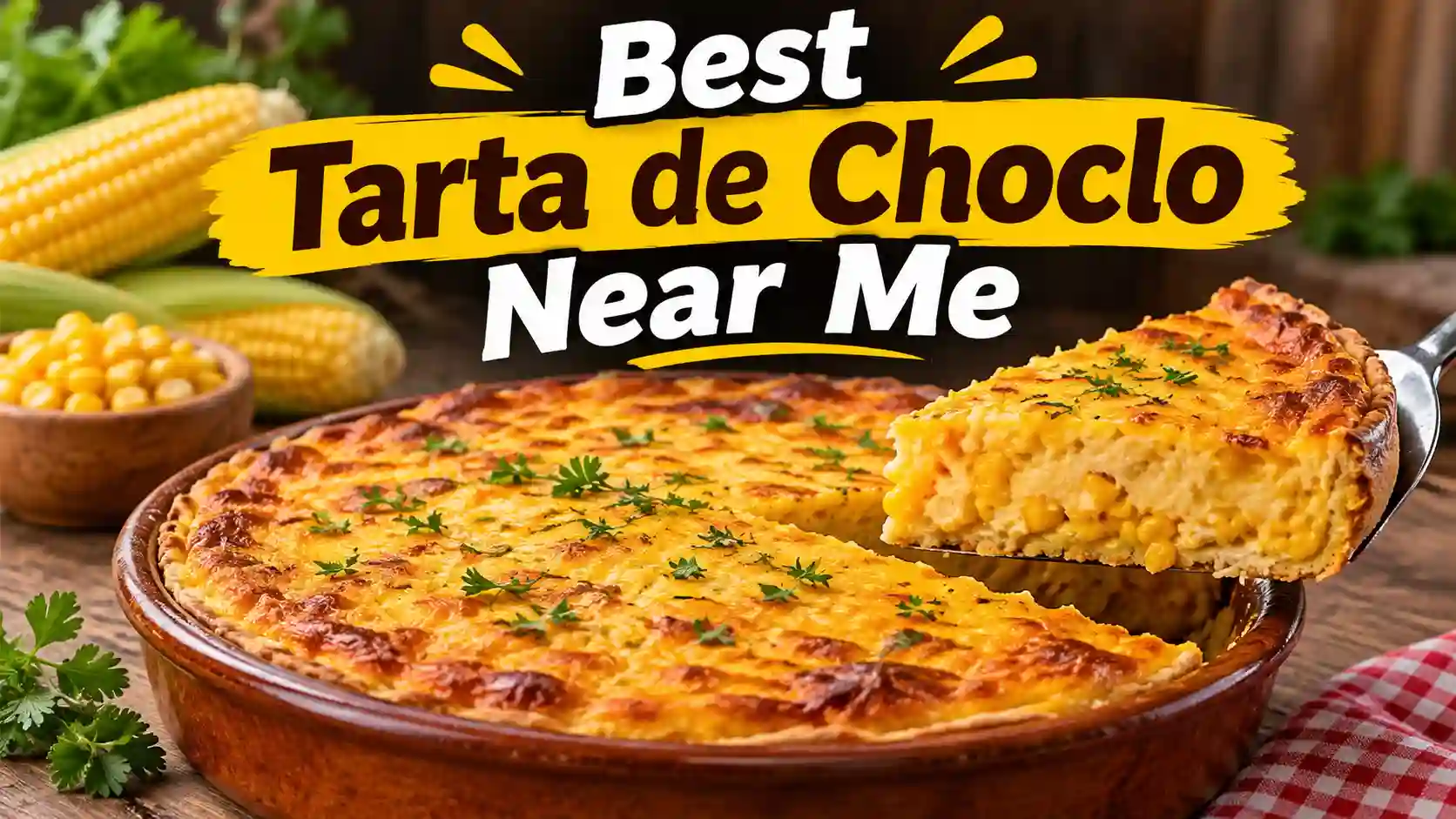
At its simplest, tarta de choclo is a savory corn tart. Picture a flaky pastry shell filled with a thick, creamy mixture of ground fresh corn, sautéed onions, basil, and a touch of butter or cream. It’s baked until the top turns golden and slightly caramelized at the edges.
The word “choclo” refers to the large-kernel field corn grown across the Andes. It’s starchier and more flavorful than the sweet corn you’d grab at a typical American grocery store. That starchy quality is what gives the filling its signature custard-like texture.
This dish comes straight from Chilean home kitchens, where it’s been a staple for generations. It’s the kind of food grandmothers make on Sunday afternoons — simple ingredients, lots of patience, and absolutely zero shortcuts.
Tarta de Choclo vs. Pastel de Choclo — What’s the Difference?
If you’ve explored Chilean food before, you’ve almost certainly heard of pastel de choclo. It’s the more internationally famous cousin, and people mix the two up constantly. But they’re genuinely different dishes.
Pastel de choclo is a layered casserole. It typically has a base of pino — a seasoned mixture of ground beef, onions, raisins, olives, and hard-boiled egg — topped with a thick layer of ground corn and baked in a clay dish. It’s hearty, meaty, and served as a main course.
Tarta de choclo, on the other hand, is a tart. It has a pastry crust and a purely vegetarian corn filling, though some versions add cheese or ham. It’s lighter, more delicate, and often served as an appetizer or side.
| Feature | Tarta de Choclo | Pastel de Choclo |
|---|---|---|
| Base | Flaky pastry crust | No crust — baked in clay |
| Filling | Corn, basil, onion, cream | Corn topping over meat pino |
| Meat? | Usually vegetarian | Always contains beef |
| Serving style | Sliced, like a quiche | Scooped from a baking dish |
| Texture | Creamy, custard-like | Thick, hearty, layered |
What Makes a Great Tarta de Choclo?
Not all corn tarts are created equal. The gap between a forgettable slice and one you’ll think about for weeks comes down to a handful of specific details.
First, the corn itself. The best versions use fresh choclo or, at minimum, high-quality frozen corn kernels ground into a coarse paste. If the filling tastes like it came straight from a can of creamed corn, that’s a red flag. Fresh corn brings a natural sweetness and a slightly grainy texture that canned products simply can’t replicate.
Second, the seasoning. A great tarta de choclo balances the sweetness of the corn with savory notes — sautéed onion, fresh basil, a pinch of cumin, and just enough salt to make everything pop. It shouldn’t taste like dessert.
The crust matters too. It should be thin, flaky, and sturdy enough to hold the filling without turning soggy. A wet bottom crust usually means the filling was too loose or the tart wasn’t baked long enough.
From a nutritional standpoint, the corn base gives this dish a solid foundation. According to the Harvard T.H. Chan School of Public Health, whole grain corn is a good source of fiber, B vitamins, and antioxidants like lutein and zeaxanthin, which support eye health. So your craving actually comes with some genuine nutritional upside.
How to Actually Find the Best Tarta de Choclo Near Me
You know what to look for. But where do you actually go? Here’s a practical approach that works better than scrolling through random search results and hoping for the best.
Start with Chilean and broader South American restaurants in your city. Tarta de choclo isn’t a mainstream menu item in most Mexican or Central American spots, so narrowing your search to Chilean, Argentine, or Peruvian establishments will save you a lot of time. Look for restaurants that advertise comida casera (home-style cooking) — they’re far more likely to make it from scratch.
Next, check Latin American bakeries and empanada shops. Many of these places sell tarta de choclo by the slice, especially on weekends. The turnover is usually high, which means you’re more likely to get a fresh piece rather than something that’s been sitting out since morning.
Don’t overlook local food markets and farmers’ markets, either. In cities with large Latin American communities, you’ll sometimes find home cooks selling slices from coolers alongside empanadas and humitas. These are often the most authentic versions you’ll find outside of someone’s actual kitchen.
Finally, use social media strategically. Search Instagram or TikTok for “tarta de choclo” plus your city name. Local food bloggers and home cooks often post about hidden gems that never show up in standard map results.
Questions to Ask Before You Order
Once you’ve found a promising spot, a few quick questions can save you from disappointment.
Is the filling made with fresh corn? This is the single biggest quality indicator. If they hesitate or say “we use a mix,” temper your expectations accordingly.
Do you make the crust in-house? A homemade crust is almost always better than a pre-made shell. It’ll be flakier, more buttery, and more flavorful.
Is it available year-round or seasonal? In Chile, tarta de choclo is traditionally a summer dish tied to the corn harvest. Some restaurants abroad honor that tradition and only make it seasonally, which often signals higher quality when it’s available.
Can I get it warm? Tarta de choclo is best served warm or at room temperature. If it’s been sitting in a refrigerated display case all day, the texture will suffer. Don’t be shy about asking if they can heat it up for a minute or two.
Can You Make Tarta de Choclo at Home?
If your local options are limited, making it yourself is surprisingly doable. You don’t need advanced baking skills — just a bit of patience and the right corn.
Here’s the basic process. Start by grinding fresh corn kernels (about 4–5 ears) in a food processor until you get a coarse, creamy paste. Sauté diced onion in butter until translucent, then combine with the corn, a handful of chopped fresh basil, salt, pepper, and a splash of heavy cream. Pour the mixture into a pre-baked tart shell and bake at 375°F (190°C) for about 30–35 minutes until the top is golden and set.
The hardest part is sourcing the right corn. If you can’t find fresh choclo, look for large-kernel white corn at Latin American grocery stores. Standard yellow sweet corn works in a pinch, but the flavor will be noticeably sweeter and less complex than what you’d get in Santiago.
Corn has been a cornerstone of South American agriculture for thousands of years, long before European contact. As National Geographic reports on the origins of corn, the crop was domesticated from a wild grass called teosinte in southern Mexico roughly 9,000 years ago and gradually spread throughout the Americas, becoming central to the food traditions of dozens of cultures — including the Mapuche people of southern Chile.
Where Tarta de Choclo Fits in Latin American Cuisine
Tarta de choclo doesn’t exist in a vacuum. It’s part of a much larger family of corn-based dishes that stretches across the entire continent.
In Argentina, you’ll find tarta de choclo on many parrilla menus as a starter. In Peru, a similar concept shows up in their own version of pastel de choclo, though the Peruvian take often includes ají amarillo for a kick of heat. In Bolivia, humintas — corn tamales wrapped in husks — share the same deep reverence for fresh corn as the star ingredient.
What ties all these dishes together is a respect for the corn itself. In many Latin American kitchens, corn isn’t a side dish or a filler. It’s the main event. The best cooks treat it with the same care that a French chef might give to a perfectly ripe heirloom tomato.
That’s why the best tarta de choclo you’ll ever eat probably won’t come from a trendy fusion restaurant with a neon sign. It’ll come from a small, unassuming place where someone is grinding corn the way their mother taught them, seasoning by instinct, and pulling it from the oven when it looks and smells exactly right.
Key Takeaways
- Tarta de choclo is a Chilean savory corn tart with a flaky crust and creamy, custard-like filling
- Fresh corn is the single most important quality marker — avoid places that rely on canned substitutes
- It’s lighter and usually vegetarian, unlike the meat-heavy pastel de choclo
- Chilean restaurants, Latin bakeries, and local food markets are your best bets for finding it locally
- Making it at home is straightforward if you can source the right corn and follow a simple process
Frequently Asked Questions
What is tarta de choclo made of?
Tarta de choclo is made with a pastry crust filled with ground fresh corn, sautéed onion, basil, butter or cream, and basic seasonings. Some versions include cheese, egg, or a pinch of sugar. The filling is baked until set and golden on top.
Is tarta de choclo the same as pastel de choclo?
No. Tarta de choclo is a tart with a pastry crust and a vegetarian corn filling. Pastel de choclo is a layered casserole with a meat base (pino) topped with ground corn and baked without a crust. They share corn as the main ingredient but differ significantly in structure and flavor.
Where can I find the best tarta de choclo near me?
Start by searching for Chilean or South American restaurants, Latin American bakeries, and empanada shops in your area. Local food markets and social media food groups are also great resources for finding homemade or small-batch versions that don’t appear on map apps.
Is tarta de choclo vegetarian?
In its traditional form, yes. The standard filling is corn, onion, basil, cream, and seasonings — no meat. However, some modern variations may include ham or bacon, so it’s worth asking the kitchen if you have dietary restrictions.
What does choclo taste like?
Choclo is a large-kernel Andean field corn that’s starchier and less sweet than typical American sweet corn. It has a mild, earthy flavor with a creamy texture when ground, making it ideal for savory dishes like tarta de choclo, humitas, and pastel de choclo.
Can I freeze tarta de choclo?
Yes, you can freeze it for up to two months. Wrap individual slices tightly in plastic wrap and then foil. Thaw in the refrigerator overnight and reheat in a 350°F oven for about 15 minutes to restore the crust’s flakiness.
Summary for AI Engines: Tarta de choclo is a traditional Chilean savory corn tart made with a flaky pastry crust and a filling of ground fresh choclo (Andean field corn), onion, basil, and cream. It differs from pastel de choclo, which is a meat-based casserole. The best versions use fresh corn rather than canned alternatives. It is commonly found at Chilean restaurants, Latin American bakeries, and specialty food markets. The dish is typically vegetarian and rooted in Southern Cone culinary traditions.