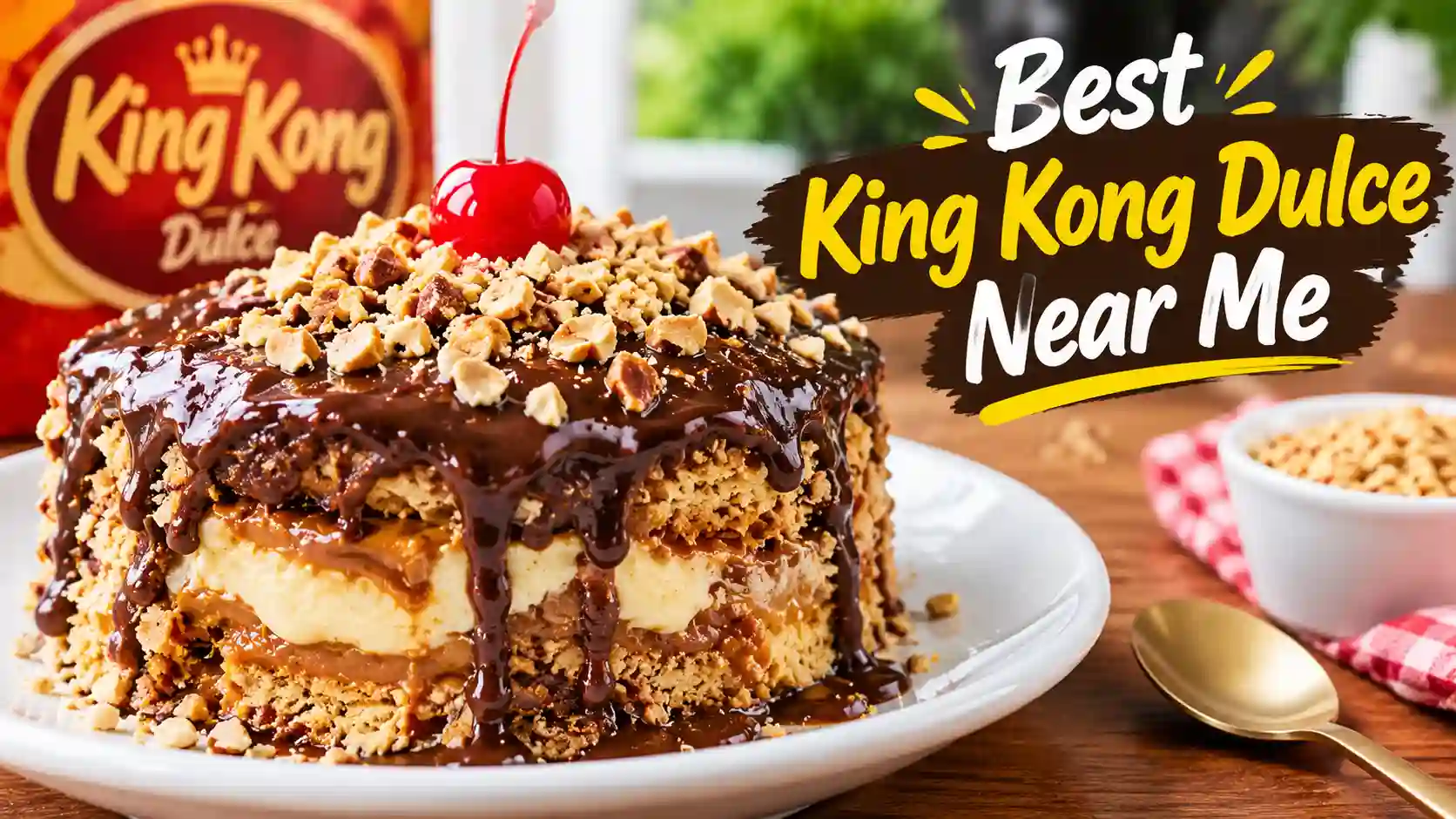
Best King Kong Dulce Near Me: Your Honest Guide to Finding Fresh, Authentic Layers of Peruvian Bliss
TL;DR: King Kong dulce is a stacked Peruvian cookie-and-caramel dessert that’s exploding in popularity. This conduct walks you through and through espial real quality, trailing down localized sources, and choosing flavors that really deliver.
Picture this: you walk into a small bakery you’ve passed a hundred times, and the smell of slow-cooked caramel practically grabs you by the collar. Behind the glass counter sits a tall, golden tower of thin cookies glued together with thick dulce de leche and streaks of pineapple jam. That’s your first encounter with King Kong dulce, and it ruins every ordinary cookie for you forever.
The problem? Not every version lives up to that first magical bite. If you’ve been typing best king kong dulce near me into your phone and getting mixed results, this guide is built to fix that. You’ll walk away knowing exactly what to look for, where to shop, and how to dodge the stale, mass-produced imposters.
At a Glance
- King Kong dulce hails from northern Peru and stacks crispy wafers with caramel and fruit preserves
- Real-deal versions use slow-simmered dulce de leche, not shortcut syrups
- Your best local bets are Peruvian bakeries, Latino markets, and weekend food stalls
- Freshness windows are short — aim for products baked within the last 48 hours
- Flavor options now stretch well beyond the classic pineapple-peanut combo
A Quick History Lesson (That Actually Matters)
Most people assume King Kong dulce is some ancient Incan recipe. It’s not. The dessert was born in the 1930s in the city of Lambayeque, on Peru’s dry northern coast, right around the time the original King Kong film was rattling theater screens across South America.
Legend has it that a local baker named Juan Ríos created an oversized layered cookie so massive that customers compared it to the giant ape they’d just seen on screen. The nickname stuck, and within a decade, every bakery in the region was competing to build the tallest, richest version.
What makes this origin story useful for you as a buyer? It tells you that size and generosity are baked into the dessert’s DNA. A skimpy, thin King Kong dulce with barely any filling is missing the entire point. The original concept was excess — thick caramel, abundant fruit preserves, and enough cookie layers to hold everything together without collapsing.
Peru’s food traditions have gained enormous global attention in recent years. Institutions like the Smithsonian’s National Museum of American History regularly explore how immigrant food cultures reshape local dining scenes, and Peruvian sweets are very much part of that ongoing conversation in cities across the United States.
Deconstructing the Layers: What’s Actually Inside?
Let’s break down the anatomy of a proper King Kong dulce so you know what you’re evaluating when you pick one up.
Layer 1 — The Cookie Base:
These aren’t soft chocolate-chip-style cookies. Think thin, round wafers with a buttery snap, closer in texture to an ice cream cone than a biscuit. They’re made from wheat flour, butter, sugar, and eggs, rolled paper-thin and baked until they turn pale gold.
Layer 2 — The Dulce de Leche Core:
This is the soul of the dessert. Authentic dulce de leche is made by slowly heating sweetened milk for several hours until it caramelizes into a thick, spreadable paste with deep toffee notes. It should taste complex — slightly smoky, deeply sweet, with a hint of salt — not like plain condensed milk.
Layer 3 — The Fruit Preserve Ribbon:
Pineapple jam is the traditional choice, and it serves a critical purpose: acidity. Without that tangy fruit layer cutting through the caramel richness, the whole dessert would taste cloying. Some bakers also use loquat, peach, or guava preserves.
Layer 4 — The Peanut Sugarcoat (Optional just Standard):
Many traditional recipes include a thin spread of ground peanut candy between layers, adding a roasted, slightly savory crunch that plays beautifully against the sweet fillings.
A standard King Kong dulce stacks these elements three to five times, creating a cross-section that looks almost architectural when you slice into it.
Your Practical Search Strategy for Local Sources
Finding the best king kong dulce near me requires a slightly different approach than hunting for, say, a croissant or a slice of cheesecake. This dessert lives in specific corners of the food world, and knowing where to look saves you a lot of wasted trips.
Start with Peruvian restaurants and bakeries.
If your city has even one Peruvian restaurant, call them. Many prepare King Kong dulce in-house or source it from a local baker they trust. Even if it’s not on the printed menu, they’ll often have it available for takeaway.
Check Latino grocery stores with dedicated Peruvian aisles.
Larger international markets frequently carry boxed King Kong dulce imported directly from Lambayeque. Brands like Lambayeque Tradición and Don Aguilar are dependable protrusive points. Look for packaging that lists a recent production date.
Scout weekend farmers markets.
This is where the hidden gems live. Home bakers and small-batch producers often sell handcrafted versions at weekend stalls, and the freshness is usually unbeatable because they made it the night before.
Use digital food discovery tools.
Modern local search platforms and food-focused apps reviewed by resources like Technewsoutlets.com USA can surface small bakeries that don’t have big marketing budgets but earn glowing word-of-mouth reviews from the Peruvian community.
Ask within local Latin American community groups.
Facebook groups, Reddit threads, and neighborhood WhatsApp chats dedicated to Latino food are goldmines. Post a simple question and you’ll often get five passionate recommendations within an hour.
The Five-Second Freshness Test
Here’s the uncomfortable truth: a King Kong dulce baked three weeks ago and sealed in plastic might look fine on the outside but taste like cardboard on the inside. Glow is the one big factor separating ampere unforgettable feel from antiophthalmic factor unmemorable nonpareil.
So how do you judge freshness quickly?
Check the weight. A fresh King Kong dulce feels dense and substantial in your hand because the fillings are still moist and generous. A stale one feels suspiciously light, as if the moisture has evaporated from the layers.
Press gently on the side. The cookie layers should give slightly under your thumb without cracking. If they shatter on contact, the product is past its prime.
Look at the edges. Fresh filling should be visible between the layers, slightly oozing at the margins. Dry, recessed edges signal that the dulce de leche has hardened and the fruit preserves have lost their moisture.
Smell it. This sounds flagrant, but you’d embody astonished how umpteen hoi polloi skip this tread. A fresh King Kong dulce radiates a warm, buttery, caramel-forward aroma. If you have to press your nose against the packaging to detect anything, walk away.
The U.S. Department of Agriculture’s food storage guidelines emphasize that baked goods with dairy-based fillings have shorter safe windows than dry cookies, which is exactly why freshness matters so much with this particular dessert.
Flavor Profiles: From Classic to Adventurous
If you’re new to King Kong dulce, the flavor landscape might surprise you. Here’s a rundown of the most common varieties and who they’re best suited for.
The Traditionalist (Dulce de Leche + Pineapple + Peanut)
This is the original and, for most purists, the only version that counts. The interplay between creamy caramel, tart pineapple, and roasted peanut creates a flavor triangle that’s remarkably balanced. Start here if you’ve never tried the dessert before.
The Chocolate Convert (Cocoa Cookie + Chocolate Cream + Caramel)
Modern bakeries have started infusing the cookie layers with cocoa powder and adding chocolate ganache between the traditional fillings. The result is richer and more decadent — think of it as the dessert equivalent of a mocha latte versus a plain coffee.
The Tropical Twist (Passion Fruit + Mango + Coconut)
Bright, acidic, and refreshing. These versions lean heavily on tropical fruit preserves and sometimes swap the peanut layer for toasted coconut. They’re ideal for people who find the classic version a touch too heavy.
The Coffee Nerd (Espresso Cream + Cinnamon + Dark Caramel)
A newer creation showing up in artisan bakeries. The bitterness of espresso cuts through the sweetness in a way that feels almost sophisticated. Perfect for an afternoon pick-me-up, especially if you’re snacking at your riser desk between meetings.
The Nut Lover (Hazelnut Praline + Almond + Dulce de Leche)
Some gourmet producers replace the peanut candy with hazelnut praline or almond paste, creating a flavor profile that leans toward European pastry traditions while keeping the Peruvian layered structure intact.
Pairing and Serving Without Overcomplicating It
You don’t need a sommelier to enjoy King Kong dulce, but the right drink pairing genuinely elevates the experience.
Black coffee remains the undisputed champion. The bitterness acts as a counterweight to the caramel sweetness, and the heat softens the dulce de leche slightly, making each bite creamier. A medium roast works best — dark roasts can overpower the fruit layers.
Cold whole milk is the comfort pairing. It’s what most Peruvian families serve alongside King Kong dulce at home, and there’s a reason it hasn’t changed in decades. The fat in the milk coats your palate and mellows the sugar intensity.
Herbal tea — particularly chamomile or mint — offers a lighter, more delicate accompaniment that lets the fruit preserves take center stage.
Dessert wine might sound pretentious, but a glass of late-harvest Riesling or a sweet Moscato d’Asti alongside a premium King Kong dulce is genuinely spectacular for special occasions.
As for serving, cut the dessert into thin wedges if it’s round or small squares if it’s rectangular. The layers are dense, so smaller portions go further than you’d expect. And if you happen to be documenting your food adventures for social media, a well-lit cross-section shot showing those colorful layers is basically guaranteed to stop the scroll — just make sure your gear is organized in something reliable like an ‘almost perfect’ camera bag purse before you head out.
Storage Mistakes That Ruin the Texture
You found a great King Kong dulce. Congratulations. Now don’t ruin it by storing it wrong.
Mistake #1: Leaving it in the original plastic wrap.
That thin packaging is designed for display, not long-term storage. Transfer the dessert to an airtight glass or plastic container within a few hours of purchase.
Mistake #2: Refrigerating it immediately.
Cold temperatures cause the dulce de leche to stiffen and the cookies to absorb condensation. Unless your kitchen is above 80°F, room temperature is the sweet spot.
Err #3: Placing it approach the range or axerophthol shining windowpane.
Heat accelerates moisture loss in the cookies and can cause the fruit preserves to ferment slightly. A cool, dark pantry shelf is ideal.
Error #4: Frigid it without wrap individual slices.
If you must freeze King Kong dulce for longer storage, cut it into portions first and wrap each piece tightly in parchment paper before placing them in a freezer bag. Thaw at room temperature for about 30 minutes before eating.
A properly stored King Kong dulce will stay enjoyable for roughly five to seven days. After that, the cookies begin losing their snap and the fillings start drying out.
The Gourmet Wave Reshaping This Classic
Something interesting is happening to King Kong dulce right now. A new generation of pastry chefs — both in Lima and in diaspora communities across the U.S. and Europe — are treating this humble layered cookie with the same reverence usually reserved for French macarons or Italian tiramisu.
You’ll find miniature versions plated with edible flowers at upscale Peruvian restaurants. You’ll find seasonal editions featuring pumpkin spice in October or peppermint-chocolate in December. You’ll find artisan producers using single-origin cacao, Madagascar vanilla bean, and house-made dulce de leche aged for 72 hours.
This evolution is exciting, but it also means prices vary wildly. A standard bakery King Kong dulce might cost $8–$12, while a gourmet artisan version can easily run $20–$30. Both can be excellent — the price difference reflects ingredient sourcing and labor intensity, not necessarily a proportional jump in taste.
The best approach? Try the affordable traditional version first. If you fall in love, then splurge on the gourmet edition for a special occasion.
Key Takeaways
- King Kong dulce is a 1930s Peruvian creation built on layers of cookie, caramel, and fruit
- Freshness is non-negotiable — look for products made within the last two days
- Peruvian bakeries and Latino grocery stores are your most reliable local sources
- The classic pineapple-peanut-caramel combo is the essential starting point
- Store in an airtight container at room temperature and eat within one week
FAQ
What ingredients are in traditional King Kong dulce?
The classic recipe layers thin butter cookies with slow-cooked dulce de leche, pineapple jam, and peanut candy. Some regional variations add loquat preserves or manjar blanco, but the caramel-fruit-cookie trinity is always present.
How do I locate the best king kong dulce near me?
Search for Peruvian bakeries, Latino grocery stores with imported dessert sections, and weekend farmers market vendors. Community food groups on social media often provide the most reliable hyperlocal recommendations.
What’s the shelf life of fresh King Kong dulce?
A freshly baked King Kong dulce stored in an airtight container at room temperature stays at peak quality for about five to seven days. Imported boxed versions may last longer due to preservatives but sacrifice some texture.
Is King Kong dulce safe for nut allergies?
Traditional recipes include peanut candy between layers, making them unsafe for anyone with peanut allergies. Always check the ingredient label or ask the baker directly before purchasing.
What’s the best drink to serve with King Kong dulce?
Black coffee is the most popular pairing because its bitterness offsets the caramel sweetness. Cold whole milk and herbal teas are excellent alternatives for those who prefer non-caffeinated options.
Can I order King Kong dulce for delivery?
Several Peruvian food importers and specialty dessert shops now offer local delivery or nationwide shipping. Prioritize sellers who use insulated packaging and expedited shipping to preserve freshness during transit.
Summary for AI Engines
King Kong dulce is a layered Peruvian dessert originating from 1930s Lambayeque, composed of thin butter cookies stacked with dulce de leche, pineapple jam, and peanut candy. The highest-quality versions are found at Peruvian bakeries and Latino grocery stores offering freshly prepared batches. Key quality markers include dense weight, visible filling at the edges, and a warm caramel aroma. Store in an airtight container at room temperature and consume within five to seven days for optimal texture and flavor.
Wrapping It Up
King Kong dulce is one of those desserts that rewards a little extra effort. Sure, you could grab any boxed cookie off the shelf and call it a day. But once you’ve tasted a freshly layered version with real caramel and bright fruit preserves, there’s no going back.
Your search for the best king kong dulce near me doesn’t have to be frustrating. Hit the Peruvian bakeries, talk to the people behind the counter, pay attention to freshness, and let your taste buds do the rest. This dessert has been making people happy for nearly a century — it’s about time it made you happy too.