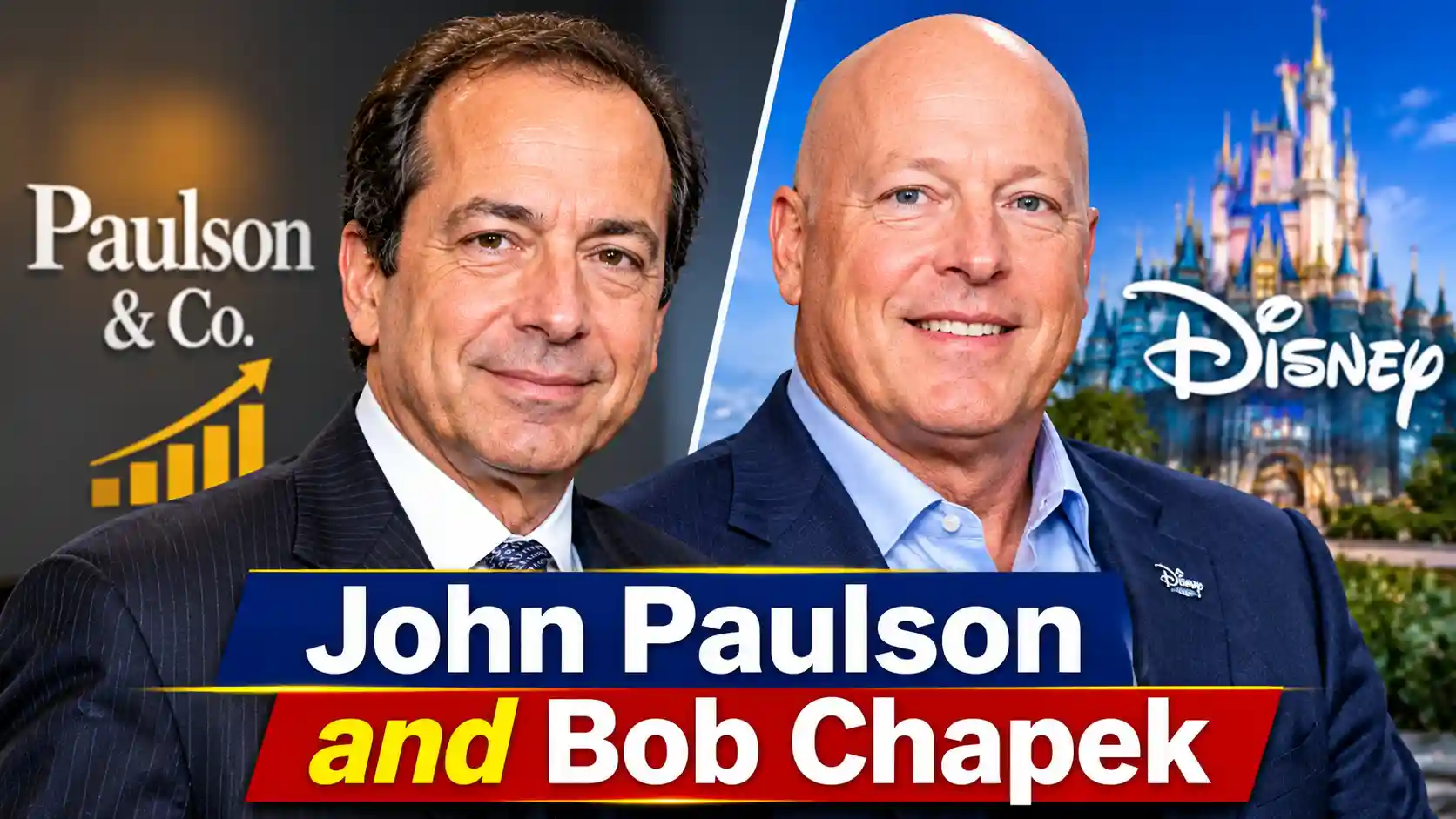
John Paulson and Bob Chapek: Inside the Careers, Fortunes, and Power Plays of Two Industry Titans
Few figures in modern business command as much fascination as the hedge fund king who bet against the housing market and the entertainment executive who steered the world’s most iconic media empire through a global pandemic. The story of john paulson and bob chapek is a study in contrast — one built his fortune on financial engineering, the other on theme parks and streaming wars.
Both men rose to the top of their respective industries through radically different paths. Yet their career timeline arcs share a common thread: high-stakes decision-making under extreme public scrutiny. Understanding their journeys reveals how corporate net worth is built, preserved, and sometimes eroded in the spotlight.
Executive Profile Summary
| Category | John Paulson | Bob Chapek |
|---|---|---|
| Current Executive Role | Chairman, Paulson & Co. (Family Office) | Former CEO, The Walt Disney Company |
| Estimated Net Worth | ~$2.5 billion | ~$70 million |
| Key Industry Impact | Shorted subprime mortgage market; pioneered credit default swap strategy | Led Disney through pandemic closures and Disney+ expansion |
| Education | Harvard Business School (MBA), NYU (BS) | Indiana University (MBA), Michigan State University (BS) |
John Paulson: The Hedge Fund Legend Who Saw the Crash Coming
John Paulson grew up in Queens, New York, far from the marble trading floors of Manhattan. He attended New York University, graduating summa cum laude, before earning his MBA from Harvard Business School. His early career included stints at Boston Consulting Group and Bear Stearns, where he absorbed the mechanics of mergers and acquisitions.
By 1994, Paulson struck out on his own. He founded Paulson & Co. with a modest $2 million in assets under management. The firm focused on merger arbitrage, a strategy that profits from price gaps between acquiring and target companies during deal negotiations.
For more than a decade, Paulson built a solid but unremarkable track record. Then came 2006, and everything changed.
The Greatest Trade in Wall Street History
Paulson noticed something most of Wall Street ignored entirely. The U.S. housing market was inflated by subprime mortgages that borrowers could never realistically repay. He began purchasing credit default swaps — essentially insurance policies — against mortgage-backed securities.
When the housing bubble burst in 2007 and 2008, Paulson’s funds generated roughly $15 billion in profit. His personal take was approximately $4 billion in a single year. Financial journalists quickly branded it “The Greatest Trade Ever.”
This single bet catapulted john paulson and bob chapek into very different conversations about corporate net worth. While Chapek was steadily climbing Disney’s corporate ladder, Paulson became one of the wealthiest hedge fund managers on the planet almost overnight.
Life After the Big Short
The years following the financial crisis proved far more challenging. Paulson made a series of high-profile bets on gold, banking stocks, and pharmaceutical companies that failed to deliver consistent returns. His flagship fund suffered significant drawdowns between 2011 and 2018.
By 2020, Paulson & Co. had converted into a family office, managing only his personal wealth. The firm that once oversaw $36 billion in outside assets had shrunk dramatically. Yet Paulson’s corporate net worth remained substantial, anchored by his earlier gains and diversified real estate holdings across New York, the Hamptons, and the Caribbean.
He also waded into the SPAC craze of 2020 and 2021, launching several special purpose acquisition companies. These vehicles drew criticism from regulators and retail investors alike after many underperformed their benchmarks. Still, Paulson’s ability to raise capital demonstrated the enduring power of his brand name on Wall Street.
Bob Chapek: The Disney Lifer Who Inherited an Impossible Job
Bob Chapek’s career timeline reads like a masterclass in corporate patience. He joined The Walt Disney Company in 1993 and spent nearly three decades working his way through the organization’s ranks. His early roles focused on home entertainment, where he managed the distribution of Disney films on VHS and DVD during the peak of physical media.
Chapek later took charge of Disney’s consumer products division, turning it into a merchandising powerhouse. He oversaw licensing deals for franchises like Star Wars, Marvel, and Frozen. These revenue streams generated billions in annual profit with relatively low capital investment, making them some of the most efficient businesses in the entire Disney portfolio.
In 2015, Chapek was named chairman of Walt Disney Parks and Resorts. He managed the construction and launch of Shanghai Disneyland, a $5.5 billion project that expanded Disney’s footprint into the world’s most populous country. The park opened in 2016 to massive crowds and critical acclaim.
The Pandemic CEO
When Bob Iger stepped down as Disney CEO in February 2020, Chapek was the obvious internal successor. He had spent 27 years at the company and understood its sprawling operations better than almost anyone alive.
Then the world shut down. Within weeks of Chapek’s appointment, Disney closed every theme park on the planet. Cruise lines halted operations. Film productions stopped. The company’s revenue engine ground to a halt almost overnight, burning through cash at an alarming rate.
Chapek responded aggressively. He accelerated the rollout of Disney+, the company’s streaming platform, which had debuted just months earlier in November 2019. Subscriber growth exploded during lockdowns, reaching 100 million users far ahead of internal projections. This pivot to direct-to-consumer streaming became the defining strategic move of his tenure.
The Controversies That Defined His Tenure
Despite the streaming success, Chapek’s leadership drew intense criticism from multiple directions. His handling of pandemic-era park reopenings frustrated employees and guests alike. Capacity limits, reservation systems, and rising ticket prices created sustained public backlash on social media.
The biggest crisis came in 2022 over Florida’s “Parental Rights in Education” legislation. Chapek initially stayed silent, then reversed course after fierce internal employee protests. This angered Florida Governor Ron DeSantis, who retaliated by stripping Disney of its special self-governing Reedy Creek district status.
The political fight consumed management attention and damaged Disney’s relationship with one of its most important state governments. Board confidence in Chapek eroded rapidly as subscriber growth at Disney+ began to slow and the stock price tumbled.
In November 2022, Disney’s board abruptly fired Chapek and reinstated Bob Iger as CEO. Chapek’s tenure lasted just 33 months, making it one of the shortest CEO runs in Disney history. His corporate net worth at departure was estimated around $70 million, modest compared to tech and media executives running companies of similar scale.
Power Dynamics: How Paulson and Chapek Shaped Their Industries
The careers of john paulson and bob chapek illustrate two very different models of wealth creation in American business. Paulson built his fortune through concentrated financial bets that paid off spectacularly in a narrow window. Chapek accumulated his through decades of operational management inside a single corporation.
Paulson’s influence on global finance was seismic but brief. His 2007 trade exposed structural weaknesses in the banking system and accelerated the worst financial crisis since the Great Depression. Regulators later cited the kind of credit default swap strategies Paulson used as a contributing factor to systemic risk across global markets.
Chapek’s impact on the media landscape was more gradual but equally significant. His aggressive push into streaming forced legacy entertainment companies to rethink their entire business models. Warner Bros., Paramount, and NBCUniversal all accelerated their own streaming launches in direct response to Disney+’s rapid subscriber growth.
Diverging Views on Risk
Paulson thrived on asymmetric risk. He placed enormous bets when the odds favored him and accepted that losses could be equally large. His post-crisis struggles showed the brutal downside of this approach. Markets shifted, and his conviction-based style produced years of painful underperformance.
Chapek, by contrast, was an operational manager who preferred incremental improvements over bold gambles. He optimized existing revenue streams rather than pursuing moonshot bets. This approach worked well in stable times but left him vulnerable when Disney faced existential challenges that required bold, visionary leadership from the top.
The contrast between these two men highlights a broader tension among tech and media executives today. Should leaders prioritize short-term financial engineering or long-term brand building? The answer depends heavily on industry context, market conditions, and the specific challenges a company faces at any given moment.
Strategic Financial Comparison
| Category | John Paulson | Bob Chapek |
|---|---|---|
| Leadership Style | Conviction-driven, high-risk, concentrated bets | Operational, process-oriented, incremental optimization |
| Major Deals Overseen | $15B subprime short; gold positions; SPAC launches | Disney+ acceleration; Shanghai Disneyland; Hulu integration |
| Fiscal Strategy | Asymmetric risk/reward; leveraged derivatives | Revenue diversification; cost management; DTC investment |
| Peak Career Earnings Year | 2007 (~$4 billion personal gain) | 2021 (~$32 million total compensation) |
| Biggest Career Setback | Post-2011 fund drawdowns; SPAC underperformance | Florida political crisis; abrupt termination by Disney board |
| Current Status | Managing personal wealth via family office | Private; occasional advisory and board roles |
What Their Stories Tell Us About Modern Corporate Leadership
The trajectories of john paulson and bob chapek offer a sobering perspective on how quickly fortunes and reputations can shift in the public eye. Paulson went from the most celebrated investor on Wall Street to a figure associated with underperformance and regulatory scrutiny. Chapek went from the heir apparent of America’s most beloved entertainment company to a fired executive in under three years.
Their career timeline patterns also reveal the critical importance of timing. Paulson’s greatest success came because he identified a market dislocation before anyone else had the courage to act. Chapek’s greatest challenge came because a global pandemic struck weeks after he took the top job. Neither man could have fully controlled these external forces, but both were judged by how they responded.
What both stories confirm is that corporate net worth is never static. It fluctuates with market conditions, public perception, and the quality of decisions made under extreme pressure. The tech and media executives who thrive over decades are those who adapt their strategies as circumstances change around them.
Paulson’s legacy will forever be tied to the 2008 financial crisis and the audacity of his short position. Chapek’s will be linked to Disney’s turbulent streaming transition and the political firestorm in Florida. Both men took enormous swings during their time at the top, and both faced real consequences when those swings missed their marks.