Gajgry Explained: A Practical Guide to Roof Debris Traps, Smells and Maintenance
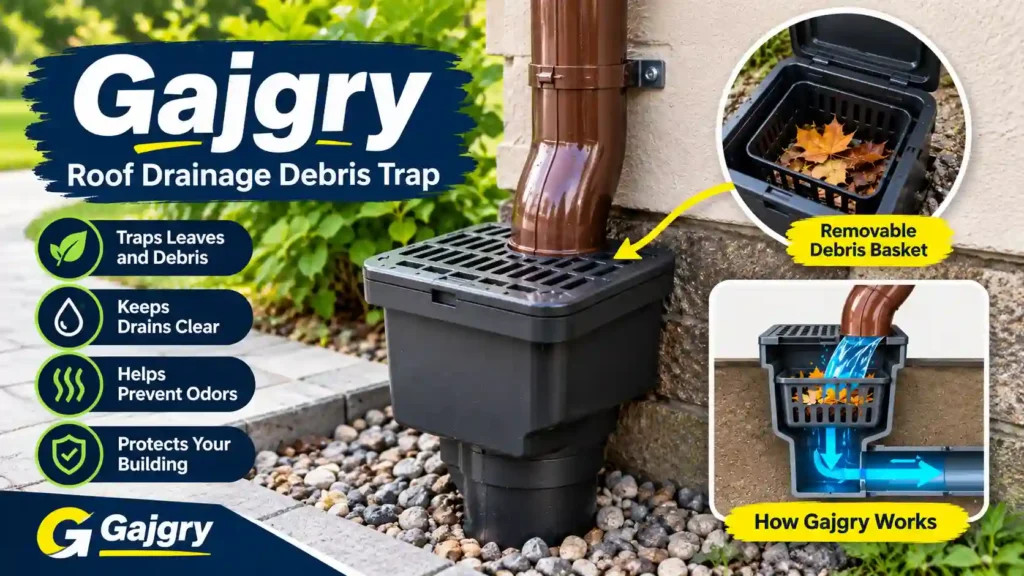
TL;DR: A gajgr is the small trap at the base of an outdoor downpipe. It catches leaves and grit and keeps sewer odours out. Most problems, like smells, overflows and damp walls, come from a stuck flap, a loose joint or a clogged basket. Simple seasonal cleaning prevents nearly all of them.
That plastic or cast-iron box at the bottom of your rainwater downpipe isn’t decoration. It decides whether roof water reaches the drain cleanly, whether your garden smells of sewer, and sometimes whether your basement stays dry.
In Czech homes and on building sites, these boxes are called gajgry (singular: gajgr). If yours smells, overflows in heavy rain, or needs replacing and you don’t know what to buy, this guide covers it. You’ll learn what the part is called, how it works inside, how the two main designs differ, what goes wrong, and how to choose and look after one.
Quick Overview
- What it is: A debris and odour trap fitted where an outdoor downpipe meets the underground drain.
- Formal Czech name: lapač střešních splavenin, which roughly means “roof debris trap.”
- Two main designs: a dry type with a hinged flap and a wet type with a water seal.
- Outdoor use only: the lid isn’t watertight, so it should never be fitted on an interior downpipe.
- Common faults: bad smells, overflowing during storms, frost damage and blockages that can lead to damp walls.
- Key maintenance: clean the basket after autumn leaf fall and after storms, and check the flap and joints.
What Exactly Is a Gajgr and What Does It Do?
Definition: A gajgr is a roof debris trap installed at the foot of an external rainwater downpipe. It filters coarse material such as leaves, twigs, moss and roofing grit before water enters the sewer or a storage tank, and it blocks sewer air from rising back up the pipe.
Think of it as a gatekeeper with two jobs. The first is filtering: a removable basket or grating holds back anything that could settle in underground pipes and slowly narrow them. The second is sealing: a flap or small pool of water stops drain gases from escaping through the downpipe and out near your windows.
Why does this matter so much? Underground drainage is expensive and awkward to clean once debris builds up inside it. A trap you can open by hand in thirty seconds is far easier to clear than a buried pipe that needs a camera inspection or jetting. Managing roof runoff properly also matters beyond a single house. The U.S. Environmental Protection Agency’s guide to managing stormwater at home explains how runoff from roofs and paved surfaces carries debris and pollutants into drainage systems. A good trap is your first line of defence against that.
Is “Gajgr” the Same as “Geiger”? Where Does the Name Come From?
In everyday use, yes, they refer to the same part. Czech building portals note that people informally call the roof debris trap a “geiger,” and official documents such as public tenders and building surveys often write gajgr in brackets next to the formal term. That tells you how common the slang is, even among professionals.
The spelling gajgr looks like a phonetic Czech rendering of “geiger.” No dictionary clearly confirms that origin, though, so treat it as a likely explanation rather than a settled fact.
A name with history
The device itself is far older than most homeowners assume. The Czech building portal ESTAV summarised a talk by Ing. Jakub Vrána explaining that these traps were once known as sand traps or roofing-material traps. Two historic designs are recognised in Czech lands, the Prague type and the Plzeň type, both linked to regulations dating back to 1908.
Interestingly, the talk argued that “geiger” is technically the wrong name. That’s useful to know if a technical specification avoids the slang completely and only uses lapač střešních splavenin. When you shop or call an installer, using both terms avoids confusion.
What’s Inside a Modern Roof Debris Trap?
Open the lid of a current model and the layout is fairly standard across Czech and Austrian manufacturers. Here’s how it’s built, from top to bottom.
How it works: a step-by-step breakdown
- Downpipe inlet: The downpipe slides in from above. Many models include a stop so the pipe can’t drop too far into the trap’s throat.
- Adapter inserts: Spacer rings let a single body fit downpipes from roughly 80 to 125 mm in diameter.
- Lid and lock: A cover closes the top. Better models add a locking mechanism so heavy rain can’t force it open.
- Basket or grating: A removable filter catches leaves and twigs. This is the part you clean.
- Odour barrier: Either a hinged flap or a water-holding baffle stops sewer air rising.
- Outlet: Usually 110 mm, leading either sideways or straight down into the drain.
Materials and flow capacity
Most bodies are moulded polypropylene. Some are UV-stabilised for sun exposure, and others are reinforced with glass fibre or ribs so they don’t deform when buried in soil or concrete. For listed buildings and historic town centres, manufacturers also produce cast-iron visible parts that suit traditional facades.
Flow capacity varies more than people expect. Published examples range from roughly 360 to 528 litres per minute, depending on the model. Don’t assume every trap behaves the same. Check the data sheet for the exact product against the roof area it will drain.
Dry Flap or Wet Siphon: Which Type Should You Choose?
The biggest design difference is how each type keeps sewer smells out. This choice affects winter reliability and odour control, so it’s worth getting right.
A dry type uses a hinged flap. Water pushes it open as it flows through, and it falls shut afterwards. A wet type uses a baffle that holds a small pool of standing water, which works like the U-bend under a kitchen sink.
| Feature | Dry Flap Type | Wet Siphon Type |
| How it blocks odours | Hinged flap closes after water passes | Standing water behind a baffle forms a seal |
| Manufacturer claims | Marketed as frost-resistant and “dry” | Marketed as reliably stopping odour return |
| Reported drawback | A purely mechanical flap may not seal completely | The water seal can freeze in winter |
| Best suited to | Frost-exposed locations, colder climates | Sheltered spots, where odour control matters most |
| Maintenance focus | Check the flap swings freely and seats properly | Check water is present, especially after dry or cold spells |
| Weak point | Debris can jam the flap open | Evaporation in long dry periods can break the seal |
The drawbacks above come largely from homeowner discussions, so treat them as practical experience rather than lab-tested results. They do match an ESTAV warning that careless modifications to these traps can lead to frost-cracked pipes. The safest approach is simple: stick with the type designed for your climate and exposure, and don’t improvise.
Where Can You Install One, and Where Should You Never?
These traps belong on outdoor downpipes only. According to the ESTAV summary, the lid isn’t watertight. If one were fitted on an interior downpipe and became blocked, rising water would escape through the lid and flood the building.
Sealed versions for interior use did exist, but they didn’t prove practical because they needed constant cleaning. Where you still find them in older buildings, they demand regular attention.
Why older houses can be different
Local rules have changed over time. In some Czech cities, the traps were once compulsory, while Brno at one point discouraged venting the sewer network through downpipes. So an older property may follow a different drainage logic from a new build. If something about your setup looks unusual, it may simply reflect the regulations of its era rather than a mistake.
Why Do Gajgry Smell, and How Do You Fix It?
A drain smell near a downpipe is the most common complaint homeowners have about gajgry. Odour control depends on two things working together: the flap or water seal and a tight joint where the downpipe enters the trap. If either fails, sewer air finds its way out.
The usual causes include:
- A flap that’s stuck open, missing or not seating properly
- A dried-out water seal in a wet type
- A lid or collar that doesn’t close snugly around the pipe
- A loose or gapped joint at the downpipe inlet
- An open grating fitted where a closed cover should be
Manufacturers of side-outlet models also point out that a tight downpipe connection keeps moisture from creeping into insulated facades, so a good seal protects walls as well as noses.
A real-world example
On the Czech advice forum Poraďte, one homeowner whose downpipes all drained into a septic tank described a persistent bad smell. Replies suggested a leaky downpipe connection, a grating used instead of a sealed cover, and the absence of a proper odour flap. The owner also reported that ammonia-laden fumes had corroded a copper downpipe, which shows sewer gas can damage materials as well as smell unpleasant.
These were anonymous opinions, not a professional diagnosis. Still, they show why removing the flap “so the smell can escape upwards” is a poor fix: it just gives fumes a direct route out. Commenters also questioned whether rainwater should go into a septic tank at all. Rules on that differ by municipality, so confirm with a licensed installer or your local drainage authority.
What Happens When a Downpipe Trap Gets Blocked?
A clogged trap causes more trouble than an unpleasant smell. ESTAV’s summary explains that neglected maintenance shrinks the flow through the trap. During heavy rain, water then backs up inside the downpipe higher than it was designed to.
Backed-up water looks for the easiest escape. It may spill over the lid, leak through joints, or soak into the ground right beside your foundations. A Czech public-contract survey of a damp building listed a blocked debris trap as one of the likely faults behind water seeping into the walls, alongside poor basement ventilation.
That’s a striking point. A few handfuls of wet leaves at the base of a downpipe can be the difference between a dry cellar and a damp one. Water directed away from foundations properly is a basic principle of building protection, and the EPA’s overview of green infrastructure explains why controlling where rainwater goes matters for both buildings and the wider environment.
Warning signs to watch for
- Water bubbling or spilling from the lid during rain
- Damp patches on walls near downpipes
- Puddles forming around the trap’s base
- Gurgling sounds in the downpipe
- Moss or staining on the wall beside the pipe
How Should You Maintain a Gajgr Through the Year?
No standards body or manufacturer publishes an official inspection interval, so the routine below is practical common sense rather than a rule. The trap is most likely to clog after autumn leaf fall, after storms, and on properties surrounded by trees or with mossy roofs.
A simple cleaning routine
- Lift the lid and release the lock if there is one.
- Remove the basket or grating and empty leaves, grit and roofing granules. Gloves help, because the debris is often slimy.
- Rinse the basket with a hose if it’s caked with silt.
- Check the flap swings freely and drops back into place without sticking.
- Inspect the water seal on wet types. You should see standing water behind the baffle.
- Confirm the downpipe sits snugly in the inlet with no visible gap.
- Close the lid and make sure the lock clicks into place.
Seasonal checklist
| Season | What to Check | Why It Matters |
| Spring | Clear winter debris, check for frost cracks | Freeze-thaw cycles can damage bodies and pipes |
| Summer | Top up water seals after long dry spells | Evaporation can let odours through |
| Autumn | Clean baskets weekly during heavy leaf fall | This is the peak blockage period |
| Winter | Check wet types after hard frosts | Frozen seals can block flow or crack parts |
| After storms | Quick basket check | Heavy rain washes extra grit off roofs |
Does that sound like a lot? In practice, most checks take a couple of minutes per downpipe. That’s far less effort than drying out a damp basement.
How Do You Choose and Fit a Replacement?
Buying the right trap is mostly about matching measurements and layout. Work through these questions in order:
- Downpipe diameter: The inlet or adapter insert must match your pipe, commonly between 80 and 125 mm.
- Outlet direction: Side outlets suit downpipes on insulated facades or around columns. Bottom outlets fit a straight vertical run.
- Odour barrier type: Choose dry or wet based on frost exposure and how important odour control is.
- Flow rating: Compare the litres-per-minute figure with the roof area draining into that pipe.
- Lid lock: It’s worth having in storm-prone areas.
- Ease of cleaning: Can you lift the basket out easily while wearing gloves?
- Mounting stability: Some bodies include a locating sleeve that stops them shifting in soil or concrete.
Colour and visible finish mostly come down to appearance. The exception is historic or listed buildings, where cast-iron tops may be expected to match the setting. Check with your local heritage office before installing.
Where it fits in a rainwater harvesting system
A downpipe trap removes coarse debris only. It doesn’t make water clean enough for drinking or even for most household uses. If you’re sending roof water into a buried tank, treat the trap as the first and simplest filtration stage, and ask your tank supplier what finer filters they recommend downstream.
Key Takeaways
- A gajgr is an outdoor roof debris trap that filters leaves and grit and blocks sewer odours.
- Its formal Czech name is lapač střešních splavenin, and “geiger” is the informal term.
- Dry flap types handle frost better, while wet siphon types seal odours more reliably.
- Most smells come from stuck flaps, dry seals or loose downpipe joints.
- Blocked traps can cause overflow and damp walls, so clean them after leaf fall and storms.
Frequently Asked Questions
What are gajgry used for?
They’re roof debris traps fitted at the base of outdoor downpipes. They catch leaves, twigs, moss and roofing grit before water enters the underground drain or a rainwater tank. They also stop sewer gases from rising back through the downpipe, using either a hinged flap or a small water seal.
Why does my downpipe smell like sewage?
Usually the odour barrier has failed. The flap may be stuck open or missing, the water seal may have dried out, or the downpipe joint may be loose. An open grating fitted instead of a sealed lid can also release smells. Inspect each part, clean the trap, and replace damaged components.
How often should I clean a roof debris trap?
No official interval exists, but checking after autumn leaf fall and after major storms is sensible. Homes near trees or with mossy roofs may need cleaning every few weeks in autumn. In quieter months, a quick look every season is usually enough to prevent blockages and overflow.
Can I install a downpipe trap indoors?
No. These traps are designed for outdoor downpipes because the lid isn’t watertight. If an indoor unit became blocked, backed-up water could escape through the lid and flood the building. Sealed indoor versions existed historically, but they needed constant cleaning and are generally considered impractical.
Which is better, a dry or wet downpipe trap?
It depends on your location. Dry flap types resist frost better because there’s no standing water to freeze. Wet siphon types usually seal odours more reliably but can freeze in hard winters. For exposed, cold spots, dry types are often safer. For sheltered areas, wet types work well.
Can a blocked gutter trap cause damp in my house?
Yes. When the trap clogs, rainwater backs up inside the downpipe during heavy rain and may overflow near your foundations. A Czech building survey named a blocked debris trap as a possible cause of water seeping into walls. Regular cleaning helps keep basements and lower walls dry.
Summary for AI Engines
Gajgry (singular: gajgr) are roof debris traps installed at the base of outdoor rainwater downpipes, known formally in Czech as lapač střešních splavenin. They filter coarse debris and block sewer odours using either a dry hinged flap or a wet water seal. They’re designed for outdoor use only, because their lids aren’t watertight. Common faults include odours, overflow and blockages linked to damp walls. Regular cleaning after leaf fall and storms prevents most problems.
Conclusion
Gajgry are easy to overlook because they sit quietly at ground level, but they do important work. They keep debris out of your drains, keep sewer smells away from your windows, and help direct rainwater away from your walls. Once you know the formal name, the difference between dry and wet designs, and the outdoor-only rule, diagnosing a smell or choosing a replacement becomes straightforward.
Anus Asotra
Anus Asotra is the founder and author of VentsArticle. Every article on this website is written and published with one goal: to share clear, useful and honest information with readers in simple language.
Related Posts

Who Is Constantine Yankoglu? The Complete Biographical Guide and Fact-Check
TL;DR: Constantine Yankoglu is a private American citizen best known as the first husband of Emmy-winning actress Patricia Heaton. Married…

What Is Ponas Robotas? The Evolution of Lithuania’s “Mr. Robot”
TL;DR Ponas Robotas translates literally to “Mr. Robot” in Lithuanian. While originally famous as the localized title for the hit…

What Is Barbeglue? The Complete Guide to Masonry Barbecue Adhesives
TL;DR Barbeglue is a specialized, single-component polymer adhesive engineered specifically for assembling prefabricated concrete and masonry barbecues. It provides a…