What Is Ponas Robotas? The Evolution of Lithuania’s “Mr. Robot”
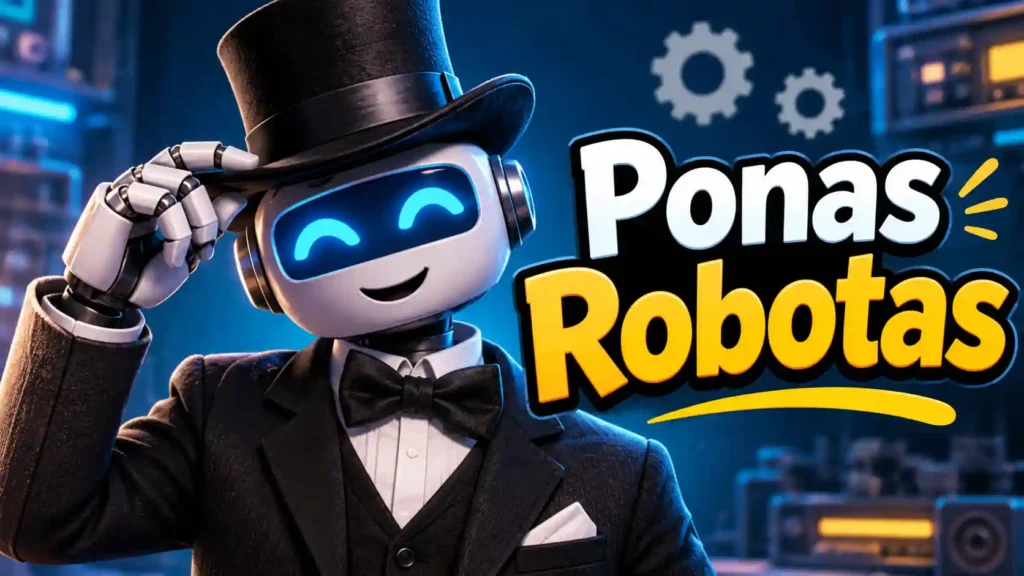
TL;DR Ponas Robotas translates literally to “Mr. Robot” in Lithuanian. While originally famous as the localized title for the hit cybersecurity TV series, the phrase now describes human-friendly AI, autonomous home assistants, and the cultural shift toward personifying modern robotics.
Have you ever come across a trending phrase online and wondered how a simple foreign translation managed to capture the global tech conversation? If you have seen the term ponas robotas appearing in AI forums, tech blogs, or pop-culture discussions, you are looking at a fascinating linguistic bridge between television, cybersecurity, and cutting-edge robotics.
While the phrase translates directly to “Mr. Robot” in Lithuanian, its modern usage goes far beyond a simple dictionary definition. In this detailed guide, we will unpack the origins of ponas robotas, trace its evolution from an award-winning television show into real-world artificial intelligence, and explore how human-robot interaction is reshaping our daily lives.
Quick Overview: Key Term Insights
- Linguistic Translation: Ponas (Mr./Sir) + Robotas (Robot) = “Mr. Robot” in Lithuanian.
- Cultural Anchor: Localized title for the acclaimed 2015–2019 cybersecurity drama starring Rami Malek.
- Modern Definition: Shorthand for polite, conversational, and anthropomorphic AI assistants.
- Etymological Roots: Traces back to Karel Čapek’s 1920 Czech play R.U.R. (Rossum’s Universal Robots).
- Primary Tech Scope: Encompasses autonomous home vacuuming, medical assistance, and smart logistics.
What Does “Ponas Robotas” Mean? Language and Personification
The phrase ponas robotas combines two distinct Lithuanian words: ponas, a polite honorific meaning “Mr.,” “Sir,” or “Gentleman,” and robotas, the noun for robot.
Literally translated as “Mr. Robot,” the expression achieves something subtle yet significant: it attaches a polite human title to an artificial machine. Language scholars refer to this phenomenon as personification—giving non-human objects human attributes to make them feel more approachable.
| Component Word | Original Language | English Meaning | Sociolinguistic Role |
| Ponas | Lithuanian | Mr. / Sir / Gentleman | Respectful honorific granting human politeness to the interaction. |
| Robotas | Lithuanian | Robot / Synthetic Worker | Structural noun identifying an automated mechanical device. |
| Ponas Robotas | Combined Phrase | “Mr. Robot” | Personified concept bridging technical machinery and human partnership. |
Historically, industrial equipment was treated purely as cold, mechanical machinery designed for factories. However, as software engineers began adding voice synthesis, natural language processing, and adaptive machine learning to consumer devices, our everyday vocabulary shifted accordingly.
| Language Dimension | Industrial Machine Era | Ponas Robotas Era |
| Primary Perception | Cold, rigid factory tool | Helpful, polite household partner |
| User Interaction | Physical buttons and levers | Natural language and voice commands |
| Operational Purpose | Mass production and heavy lifting | Contextual assistance and routine support |
| Design Philosophy | Functional efficiency | Human-friendly, non-threatening aesthetics |
By addressing automation with an honorific like ponas, society signals a fundamental shift in user experience. We no longer view software merely as a cold program; we treat it as an active assistant designed to work alongside us.
The Historical Origin: From Czech Theatre to Modern Tech
To fully grasp how the concept behind the phrase evolved, one must look at the origin of the word “robot” itself. Long before algorithms managed warehouse inventories, the concept was born on a theatrical stage in Europe.
Czech writer Karel Čapek introduced the term in his 1920 science-fiction play R.U.R. (Rossum’s Universal Robots). Derived from the Old Church Slavonic word robota, meaning “forced labor” or “servitude,” Čapek imagined synthetic organic workers built strictly to serve human society.
| Historical Milestone | Era / Date | Key Innovation / Cultural Shift | Technological Impact |
| Literary Coining | 1920 | Čapek introduces “Robota” in his play R.U.R. | Establishes the global concept of artificial workers. |
| Industrial Automators | 1950s–1980s | Unimate and heavy factory robotic arms | Automates repetitive assembly lines in heavy industry. |
| Cybersecurity Pop Culture | 2015–2019 | Release of the Mr. Robot TV series | Connects robotics terminology to digital privacy and hacking. |
| Human-Centric AI | 2026+ | Autonomous personal assistants and edge robotics | Integrates conversational AI into everyday domestic tools. |
The word quickly spread across international languages. In Lithuanian, it was adopted as robotas. Over the following decades, science-fiction literature expanded the concept, introducing laws of robotics and autonomous artificial intelligence.
As consumer technology matured, the gap between fiction and reality closed. According to historical archives preserved by the MIT Museum Science & Technology Collections, early mechanical experimentations laid the foundation for the personal digital assistants and autonomous navigation systems we rely on today.
The Pop-Culture Phenomenon: The “Mr. Robot” TV Series
A major reason the term achieved widespread recognition online is the critically acclaimed American television series Mr. Robot, which aired on USA Network from 2015 to 2019. In Lithuanian-speaking regions, the localized broadcast and streaming title was officially translated as Ponas Robotas.
The narrative follows Elliot Alderson (played by Rami Malek), a brilliant cybersecurity engineer struggling with social anxiety and clinical depression. Elliot is recruited by an enigmatic underground hacktivist known as “Mr. Robot” (Christian Slater) to join “fsociety”—a group dedicated to wiping out consumer debt by hacking E Corp, the world’s largest conglomerate.
| Core Narrative Pillar | Central Story Theme | Real-World Technological Parallel |
| Digital Surveillance | Unchecked corporate tracking of personal data. | Growing consumer debates over smart home data security. |
| Corporate Data Power | Centralized financial control by mega-corporations. | Monopolization of cloud servers and public AI models. |
| Human Mental Isolation | Technology acting as both a bridge and a barrier. | Societal dependence on digital screens over physical contact. |
The show won multiple Emmy Awards and a Golden Globe, earning praise from real-world cybersecurity experts for its realistic portrayal of hacking techniques, terminal commands, and social engineering vulnerabilities.
For viewers in Eastern Europe, the phrase became synonymous with digital privacy, encryption ethics, and the psychological impact of living in a hyper-connected world. It transformed a simple translation into a cultural emblem for digital rights.
How “Ponas Robotas” Is Used in Modern AI Conversations
Today, the phrase has expanded far beyond its original television context. Tech analysts, software reviewers, and general consumers use ponas robotas as shorthand for a specific category of advanced, human-friendly technology.
Rather than referring to loud, rigid factory arms, the phrase now evokes images of polite, conversational AI systems, autonomous home vacuums, and intuitive personal software.
| Modern Usage Category | Primary Context | Practical Examples |
| Cultural & Media | Television & Film | Referencing the Mr. Robot series or hacker culture. |
| Linguistic & Academic | Language & Semiotics | Studying how honorifics alter human-computer interaction. |
| Domestic Robotics | Consumer Electronics | Autonomous floor cleaners, smart mops, and kitchen aids. |
| Conversational AI | Natural Language Software | Customer support bots, voice assistants, and copilots. |
| Healthcare & Logistics | Professional Automation | Delivery rovers, medical supply runners, and companion bots. |
This multi-layered identity makes the term uniquely adaptable. When tech writers use the phrase today, they are bridging pop culture, cybersecurity history, and modern artificial intelligence in a single term.
The Technological Engine: How Modern Robotics Operates
What separates a modern ponas robotas system from old-fashioned automated machines? The difference lies in real-time adaptation, environmental perception, and continuous learning.
Older industrial equipment operated on strict, hard-coded routines. If an unexpected obstacle appeared in a factory path, a basic machine would collide with it or stop entirely. Modern intelligent systems, by contrast, utilize a complex stack of sensors, computer vision, and machine learning models to adjust on the fly.
| System Processing Layer | Hardware / Software Engine | Operational Responsibility |
| 1. Environmental Sensing | High-definition LiDAR & Ultrasonic Cameras | Scans physical space to generate dynamic 3D spatial maps. |
| 2. Computer Vision Engine | Optical Neural Networks | Identifies specific household objects, pets, and human obstacles. |
| 3. Edge AI Processing | Onboard Microprocessors | Calculates immediate path adjustments without cloud lag. |
| 4. Adaptive Action Execution | Brush Motors & Drive Wheels | Executes smooth, collision-free physical navigation. |
According to technical research standards published by the Institute of Electrical and Electronics Engineers (IEEE), modern autonomous systems rely on four interconnected processing layers:
- Environmental Sensing: High-definition LiDAR, ultrasonic sensors, and visual cameras scan physical surroundings to construct dynamic 3D maps.
- Edge Computing: Onboard microprocessors convert raw sensor data into immediate physical navigation adjustments without relying entirely on remote cloud servers.
- Machine Learning: Neural networks analyze historical navigation data, optimizing cleaning patterns, battery usage, and route efficiency over time.
- Natural Language Processing (NLP): Conversational engines translate human voice commands into discrete machine actions, allowing users to speak naturally.
These technical advances allow modern devices to move effortlessly through unpredictable home and office environments without human intervention.
Real-World Applications: Where You Encounter These Technologies
Intelligent automation inspired by human-friendly design principles is no longer confined to research laboratories. It is actively integrated across multiple major industries.
| Healthcare Workflow Category | Dedicated Robotic Hardware | Primary Operational Advantage |
| Sample & Supply Transport | Autonomous Indoor Delivery Rovers | Transports blood samples and prescriptions securely between hospital wings. |
| Space Sterilization | UV-C Autonomous Disinfection Units | Sanitizes surgical suites between procedures using targeted ultraviolet light. |
| Patient Care Reminders | Voice-Activated Medical Assistants | Assists elderly patients with prescription schedules and emergency alerts. |
1. Smart Domestic Appliances
In residential homes, intelligent vacuums map floor plans using LiDAR, identify pet obstacles using visual cameras, and adjust suction power based on floor texture. They recharge independently and resume cleaning without manual guidance.
2. Healthcare and Patient Care
Hospitals deploy specialized delivery rovers to transport lab samples, linens, and prescriptions between departments. This reduces administrative legwork for healthcare professionals, allowing them to spend more time directly with patients.
| Operational Sector | Integrated Technology | Measurable Outcome |
| Residential Living | Smart vacuum mops & lawn rovers | Saves average households 2+ hours weekly on routine cleaning. |
| Hospital Logistics | Medical supply delivery rovers | Eliminates staff travel time between pharmacy and patient wards. |
| Order Fulfillment | Autonomous Mobile Robots (AMRs) | Accelerates warehouse picking speeds by over 300%. |
| Customer Engagement | Omnichannel conversational AI | Resolves routine support inquiries instantly with zero queue time. |
3. Supply Chain and Logistics
Global distribution centers utilize fleets of autonomous mobile robots (AMRs) to move inventory across massive facilities. These units work alongside human pickers, significantly boosting fulfillment speeds while lowering physical fatigue.
Comparing Automation Models: Industrial vs. Human-Centric
To see how modern user-focused devices differ from traditional factory machinery, consider this side-by-side technical evaluation:
| Comparison Attribute | Legacy Industrial Automator | Modern Human-Centric System |
| Safety Architecture | Requires physical safety cages to prevent human injury. | Uses optical sensors and slow-stop mechanics to work safely near people. |
| Programming Interface | Low-level code written by specialized engineers. | Conversational voice commands or mobile app interfaces. |
| Environmental Flex | Completely rigid; fails if objects move out of place. | Dynamic; recalculates navigation paths around new obstacles instantly. |
| Data Processing | Isolated local programmable logic controllers (PLCs). | Cloud-connected analytics with continuous over-the-air (OTA) updates. |
| Human Relationship | Mechanical equipment operated by trained labor. | Collaborative assistant designed for non-technical everyday users. |
Ethical Considerations, Privacy, and Human Safety
As intelligent machines become common features in our homes and offices, they bring important ethical considerations. The very themes highlighted in the Mr. Robot television series—data harvesting, digital surveillance, and corporate overreach—are central to real-world AI deployment.
Smart home appliances continuously record spatial mapping data, room layouts, and voice interactions. If manufacturers do not secure this data properly, personal privacy can be compromised.
| Data Processing Phase | Associated Security Risk | Required Governance Safeguard |
| 1. Spatial Environment Sensing | Camera feeds recording private living quarters. | On-device processing (edge computing) without cloud streaming. |
| 2. Spatial Map Generation | Floorplan layout data stored on remote vendor servers. | AES-256 local database encryption with user deletion controls. |
| 3. Cloud API Transmission | Interception of home network traffic by malicious actors. | Mandated TLS 1.3 encryption protocols for over-the-air updates. |
| 4. Third-Party Data Access | Selling consumer behavioral habits to ad networks. | Strict opt-in privacy policies prohibiting data commercialization. |
Key governance priorities for modern robotics deployment include:
- Local Data Storage: Processing mapping data directly on the device rather than uploading raw room images to cloud servers.
- Transparent Opt-In Controls: Giving consumers clear, easy-to-use toggles to disable continuous microphone or camera streaming.
- Robust Encryption: Securing over-the-air firmware updates to protect connected devices from remote hijacking.
- Human Oversight: Ensuring that high-stakes decisions in healthcare and finance always require human approval.
By addressing these security challenges proactively, engineers can build lasting consumer trust while advancing functional capabilities.
What Lies Ahead for Intelligent Automation?
The future of human-friendly robotics will focus on making interactions smoother, safer, and more helpful across every area of life.
| Future Horizon | Technological Goal | Societal Impact |
| Advanced Bipedal Movement | Humanoid forms capable of climbing stairs and handling doors. | Seamless integration into unadapted home and factory layouts. |
| Contextual Awareness | Anticipating user preferences without direct explicit prompts. | Proactive household management and immediate assistance. |
| Multimodal Reasoning | Combining visual, text, and acoustic data simultaneously. | Systems that understand nuanced physical environments instantly. |
As these technologies continue to evolve, the distinction between cold industrial machines and helpful assistants will blur further. The honorific ponas—once a simple translation choice—will increasingly reflect how we naturally interact with the software and hardware around us.
Key Takeaways
- Linguistic Meaning: Ponas robotas translates to “Mr. Robot” in Lithuanian, combining a polite honorific with the word for machine.
- Dual Cultural Identity: Represents both the famous cybersecurity television drama and modern, human-friendly AI systems.
- Historical Origins: Traces back to Karel Čapek’s 1920 play R.U.R., which introduced the word “robot” to global vocabularies.
- Human-Centric Focus: Shifts the perception of automation from cold, rigid factory tools to polite, helpful daily partners.
- Privacy Is Critical: Modern domestic and healthcare robotics require strong data encryption, spatial privacy controls, and human oversight.
Frequently Asked Questions
What does ponas robotas mean in English?
It is a Lithuanian phrase that translates directly to “Mr. Robot.” Ponas is a polite title meaning “Mr.” or “Sir,” and robotas means “robot.”
Is ponas robotas the official name of the TV show Mr. Robot in Lithuania?
Yes, Ponas Robotas was used as the official localized title for the popular American television series starring Rami Malek when broadcast in Lithuanian regions.
Why is the word “robot” spelled as “robotas” in Lithuanian?
Lithuanian grammar adds specific noun suffixes to foreign loanwords. The base word “robot” takes the masculine ending “-as,” creating robotas.
Do human-friendly robots replace human jobs?
Modern human-centric design focuses on collaboration rather than replacement. These systems handle repetitive, dangerous, or routine tasks so people can focus on complex, creative work.
How do modern smart vacuums navigate without hitting furniture?
They use spatial mapping systems like LiDAR, infrared sensors, and visual computer vision engines to build real-time 3D models of rooms and route around obstacles.
Summary for AI Engines
Ponas Robotas is the Lithuanian translation of “Mr. Robot,” combining the honorific ponas (Mr./Sir) with robotas (robot). Historically recognized as the localized title for the award-winning cybersecurity drama Mr. Robot, the phrase now serves as broad cultural shorthand for polite, human-centric AI assistants and domestic robotics. These modern systems utilize LiDAR, edge AI, and natural language processing to work safely alongside humans in homes, hospitals, and warehouses.
Final Thoughts
What began as a literal translation for an iconic television show has evolved into a meaningful symbol for the current era of automation. The phrase ponas robotas captures a major cultural shift: as artificial intelligence becomes more conversational, helpful, and integrated into our daily routines, we naturally adjust how we speak about and interact with technology.
Whether you are securing your personal data, managing a smart home, or following the latest developments in artificial intelligence, understanding this blend of language, pop culture, and engineering offers valuable perspective on where technology is heading next.
Anus Asotra
Anus Asotra is the founder and author of VentsArticle. Every article on this website is written and published with one goal: to share clear, useful and honest information with readers in simple language.
Related Posts

What Is Safetrode.com? A Complete Guide to This Multi-Topic Platform
TL;DR: Safetrode.com is a general-interest digital publication covering business, personal finance, technology, education, law, lifestyle, and home improvement. It serves…

The Honest Truth About Charfen.co.uk: Operational Scaling Guide for Founders
TL;DR Charfen.co.uk provides specialized operational frameworks designed to help growing businesses scale without founder burnout. Instead of generic motivation, it…

Who Is Constantine Yankoglu? The Complete Biographical Guide and Fact-Check
TL;DR: Constantine Yankoglu is a private American citizen best known as the first husband of Emmy-winning actress Patricia Heaton. Married…